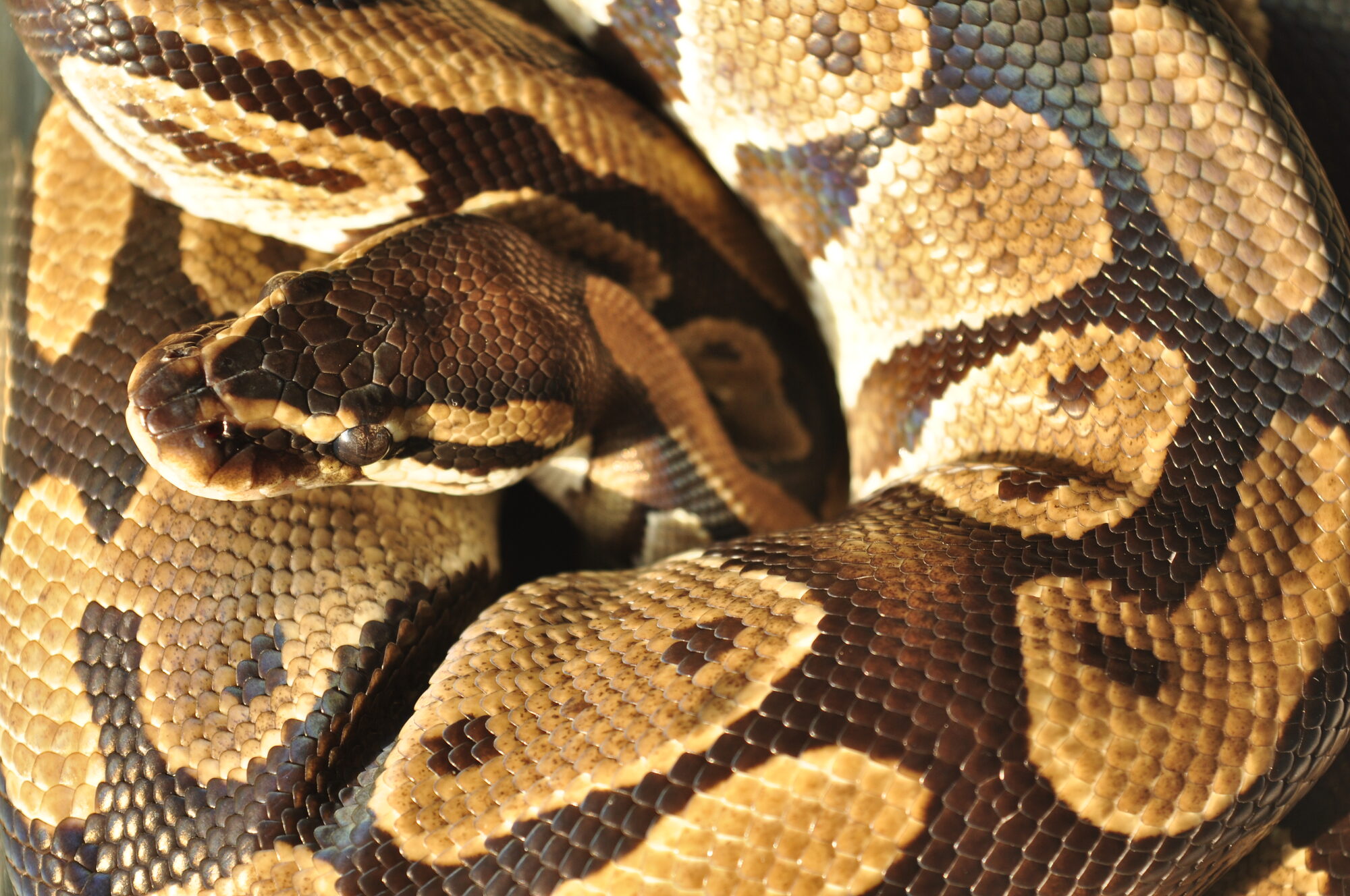
Ball Python
Docile, manageable, and available in stunning color morphs — ball pythons are the gold standard first snake for a reason.
Ball pythons are one of the most popular pet snakes in the world, and for good reason. They are docile, manageable in size, and come in a stunning variety of color morphs. If you are looking for a calm, low-maintenance reptile companion that you can actually hold and enjoy, the ball python is hard to beat. They are native to sub-Saharan Africa, where they spend most of their time in underground burrows and thick brush. With proper care, a ball python can live 20 to 30 years.
Diet & Feeding
Ball pythons are carnivores that eat pre-killed or frozen-thawed rodents. Juveniles should eat appropriately-sized mice every 5 to 7 days. Adults do well on adult mice or small rats every 10 to 14 days. Never feed live prey, as rodents can injure your snake. Thaw frozen feeders in warm water before offering them. If your ball python refuses food for a few weeks, do not panic — this is common, especially during shedding season or in the cooler months. As long as they maintain body weight, short fasts are nothing to worry about.
Housing & Habitat
A juvenile ball python can start in a 20-gallon enclosure, but adults need at least a 4-foot by 2-foot enclosure — a 40-gallon breeder tank or equivalent. Ball pythons feel most secure when their enclosure is not too large, so do not rush to upsize. Provide at least two hides, one on the warm side and one on the cool side. Substrate options include coconut fiber, cypress mulch, or a bioactive mix — all help maintain the humidity they need. Avoid cedar and pine, which are toxic to reptiles.
Temperature & Lighting
Ball pythons need a temperature gradient. The warm side should sit between 88 and 92 degrees Fahrenheit, the cool side between 76 and 80 degrees. Ambient air temperature should stay between 78 and 80 degrees. Use an under-tank heater or deep heat projector regulated by a thermostat — never use a heat rock. Humidity should be kept between 60 and 80 percent. You can achieve this with a larger water bowl, regular misting, and a substrate that holds moisture.
Handling & Temperament
Ball pythons are generally very calm and tolerant of handling once they are settled in. Give a new snake at least two weeks to acclimate before handling. After feeding, wait 48 to 72 hours before picking them up to avoid regurgitation. Start with short sessions of 10 to 15 minutes and build up from there. Support their body fully when holding them — they are not big fans of dangling. Most ball pythons will curl into a ball when frightened, which is where their name comes from.
Health Notes
The most common health issues in ball pythons are respiratory infections (wheezing, mucus), mites, and incomplete sheds. Incomplete sheds are usually a sign that humidity is too low. Mites look like tiny black or red dots moving on the snake or in the water dish. Respiratory infections often result from temperatures being too low. Regular vet checkups with a reptile-savvy vet are recommended, especially in the first year.