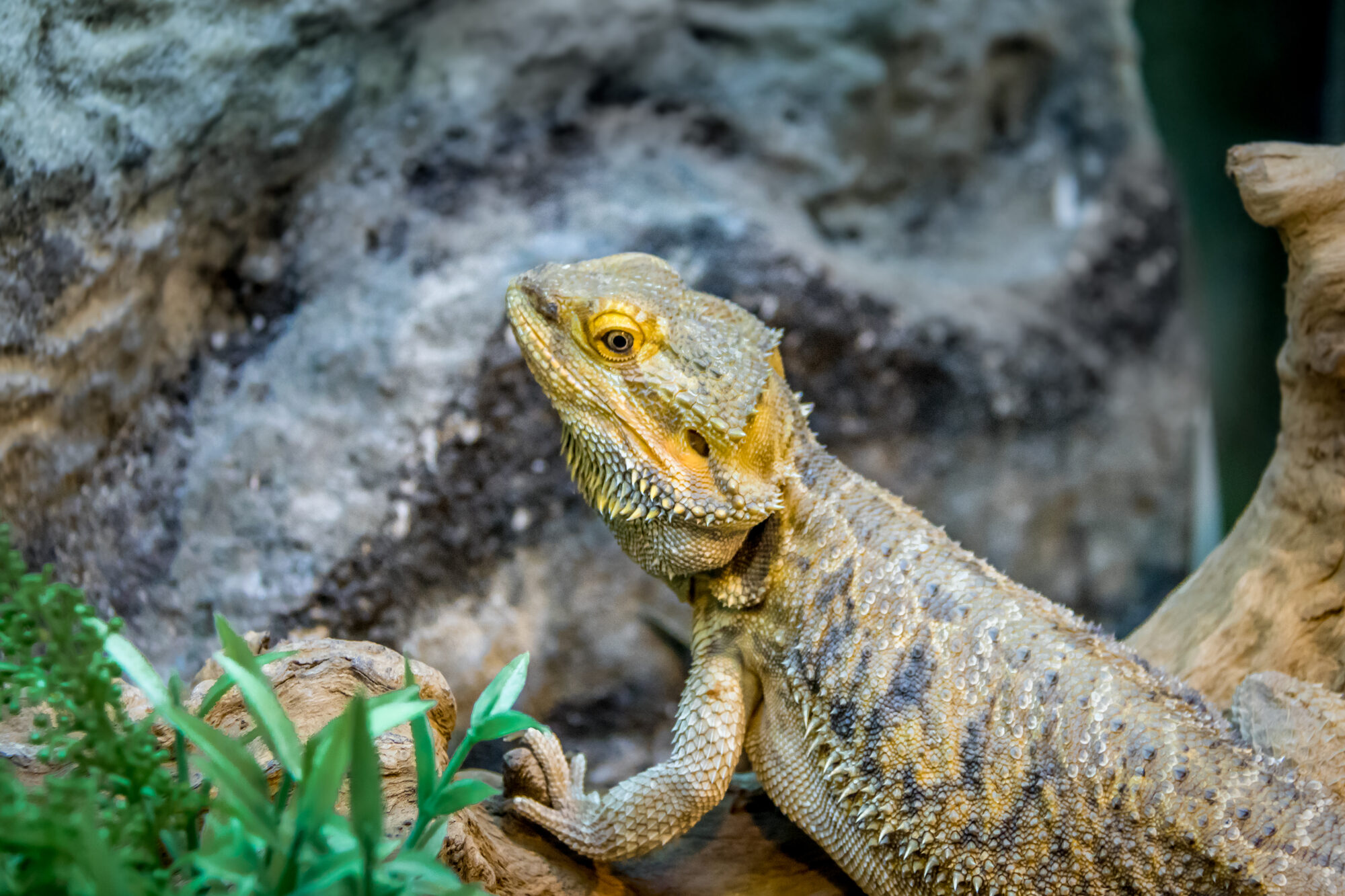
Bearded Dragon
Social, expressive, and genuinely enjoyable to spend time with — beardies are as close to a reptile dog as it gets.
Bearded dragons are one of the friendliest and most interactive reptiles you can own. Native to the arid regions of Australia, beardies are known for their sociable personalities, expressive behaviors, and tolerance for handling. They are a fantastic choice for first-time reptile owners as well as experienced keepers. With the right setup and diet, a bearded dragon can live 10 to 15 years and become a genuinely enjoyable companion.
Diet & Feeding
Bearded dragons are omnivores, meaning they eat both insects and vegetables. Juveniles need about 70 percent protein (insects) and 30 percent greens, while adults flip that ratio to mostly greens with insects a few times a week. Feeder insects include dubia roaches, crickets, and black soldier fly larvae. Greens should be collard greens, mustard greens, dandelion greens, and squash. Avoid spinach, iceberg lettuce, and fireflies. Dust food with calcium powder at most feedings and a multivitamin supplement a couple of times per week. Fresh water should always be available.
Housing & Habitat
Adult bearded dragons need a minimum 120-gallon enclosure — they are active and need room to roam, bask, and explore. Juveniles can start in a 40-gallon breeder. Provide a basking spot with a rock or log, a hide for sleeping, and some decor for enrichment. Tile, reptile carpet, or paper towels work well as substrate for juveniles. Adults can be kept on play sand mixed with organic topsoil, but loose substrate is not recommended for young dragons due to ingestion risk.
Temperature & Lighting
The basking spot should reach 100 to 110 degrees Fahrenheit. The cool side should stay around 80 to 85 degrees. At night, temperatures can drop to around 65 to 70 degrees. UVB lighting is absolutely critical for bearded dragons — without it, they cannot absorb calcium and will develop metabolic bone disease. Use a high-output UVB bulb (10.0 or T5 HO) and replace it every 6 months, even if it still appears to produce light.
Handling & Temperament
Bearded dragons are among the most handleable reptiles. Most enjoy being held, sitting on shoulders, and even watching TV with their owners. They communicate through arm waving (submission) and head bobbing (dominance or excitement). A beardie that is black-bearding and puffing up is stressed or threatened. Give new dragons a week or two to settle before handling, then build up session length gradually.
Health Notes
Metabolic bone disease from insufficient UVB or calcium is the most common serious issue in bearded dragons. Signs include soft jaw, trembling limbs, and difficulty moving. Impaction from eating loose substrate or too-large insects is another concern. Adenovirus (atadenovirus) is a viral infection common in the hobby. Parasites, respiratory infections, and yellow fungus are also possibilities. Annual vet visits with a reptile vet are strongly recommended.