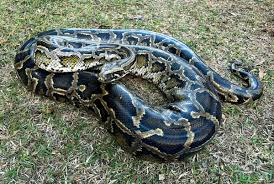
Burmese Python
The ultimate big snake — Burmese pythons demand serious commitment but deliver an unmatched experience for the right keeper.
Burmese pythons are the giants of the pet snake world. Native to Southeast Asia, they are intelligent, often gentle, and undeniably impressive — but they are not a pet for everyone. Adult Burmese pythons regularly reach 12 to 18 feet and can weigh over 100 pounds. They require large enclosures, substantial food costs, and responsible two-person handling once they exceed 8 feet. In the right hands, with the right setup, a Burmese python is a fascinating lifelong companion. They can live 20 to 25 years.
Diet & Feeding
Burmese pythons are ambush predators that eat large pre-killed prey. Juveniles eat appropriately sized rats weekly. Sub-adults move to rabbits and large rats every 10 to 14 days. Adults eat large rabbits, nutria, or whole chickens every 2 to 4 weeks. Always use frozen-thawed prey. Due to their size, food costs can be significant — buying in bulk from feeder suppliers helps. Never feed prey that is larger than the widest part of the snake's body.
Housing & Habitat
Juvenile Burmese pythons can start in standard reptile enclosures, but adults need custom-built enclosures of at least 8 by 4 feet, and ideally larger. Many keepers build dedicated snake rooms. The enclosure must be extremely secure — Burmese pythons are powerful and curious. Provide a large water container for soaking (they love water), hides appropriate to their size, and substrate like cypress mulch or coconut fiber that holds humidity.
Temperature & Lighting
The warm side should reach 88 to 92 degrees Fahrenheit. The cool side should be 78 to 82 degrees. Use radiant heat panels or large ceramic heat emitters on a thermostat. Humidity should be maintained between 60 and 80 percent. Good ventilation is important to prevent respiratory issues while still maintaining humidity.
Handling & Temperament
Burmese pythons can be very calm and tolerant of handling when properly socialized from a young age. However, their size demands respect — two people should always be present when handling a snake over 8 feet. Use a hook to initiate contact and avoid handling within 48 hours of feeding. Never handle when hungry or in shed. Despite their reputation, Burmese pythons that are well-cared-for and regularly handled are generally not aggressive.
Health Notes
Common health issues include respiratory infections, mites, inclusion body disease (IBD), and obesity from overfeeding. Scale rot can occur if substrate stays too wet. Regular veterinary checkups, including fecal parasite screenings, are important. Research local and state laws before acquiring a Burmese python — ownership is restricted or banned in some areas.