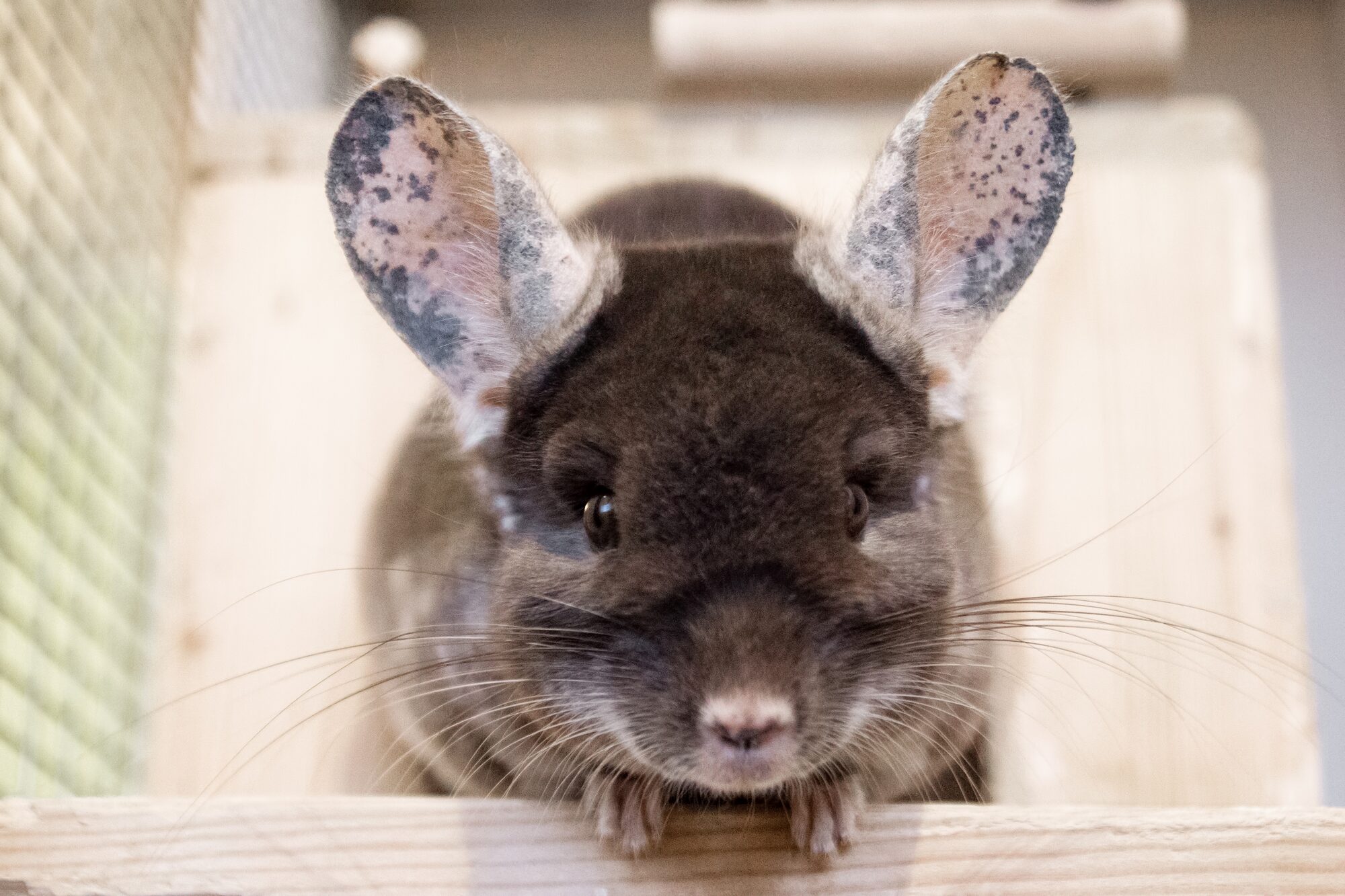
Chinchilla
Impossibly soft, lightning fast, and surprisingly long-lived — chinchillas are fascinating pets for the right owner.
Chinchillas are small, soft, and surprisingly entertaining pets. Native to the Andes mountains of South America, they are high-altitude animals built for cool, dry environments. Chinchillas are active, curious, and social — they are not typically lap animals, but they can become very comfortable with their owners and enjoy being out and about. They are best suited for owners who appreciate their nature and can provide the right environment. With proper care, a chinchilla can live 10 to 15 years, sometimes longer.
Diet & Feeding
The foundation of a chinchilla diet is unlimited high-quality timothy hay, which keeps their continuously growing teeth worn down and their digestive system healthy. Supplement with a small amount of chinchilla-specific pellets daily. Avoid muesli-style mixes where chinchillas pick out the sugary bits. Fresh water should always be available. Treats should be minimal — a small piece of rose hip, dried herb, or a single raisin occasionally is fine. Avoid sugary fruits, nuts, seeds, and vegetables high in water content, which can cause digestive upset.
Housing & Habitat
Chinchillas need a tall, multi-level cage to allow climbing and jumping — minimum 3 feet tall and 2 feet wide, larger if possible. Wire cages with solid shelves (not wire floors, which hurt their feet) work well. Provide wooden ledges, platforms, and hideaways for enrichment. Bedding should be kiln-dried pine, paper bedding, or fleece liners — avoid cedar (toxic) and scented products. Chinchillas need several hours of supervised play outside the cage each day in a chinchilla-proofed space.
Temperature & Lighting
This is critical: chinchillas are extremely sensitive to heat. They must be kept in temperatures between 60 and 70 degrees Fahrenheit. Anything above 75 degrees puts them at serious risk of heat stroke, which can be fatal quickly. Never place their cage in direct sunlight or near a heat vent. Air conditioning during summer is often necessary. They do not need extra heating unless your home drops below 55 degrees.
Handling & Temperament
Chinchillas are fast, agile, and not always thrilled about being held. Building trust takes time and patience. Start by letting them come to you, offering treats from your hand. Once comfortable, they may enjoy short handling sessions. Never grab them by the tail, and always sit on the floor during handling in case they jump. They are fragile and can be injured from falls. Some chinchillas become quite tame and cuddly; others prefer to interact on their own terms.
Health Notes
Dental disease is the most serious health concern in chinchillas — their teeth grow continuously and can become misaligned or overgrown. Symptoms include drooling, weight loss, and difficulty eating. GI stasis, fur slip (releasing patches of fur as a defense mechanism), and respiratory infections are also possibilities. Dust baths using commercial chinchilla dust 2 to 4 times per week keep their coat healthy — never use water to bathe a chinchilla.