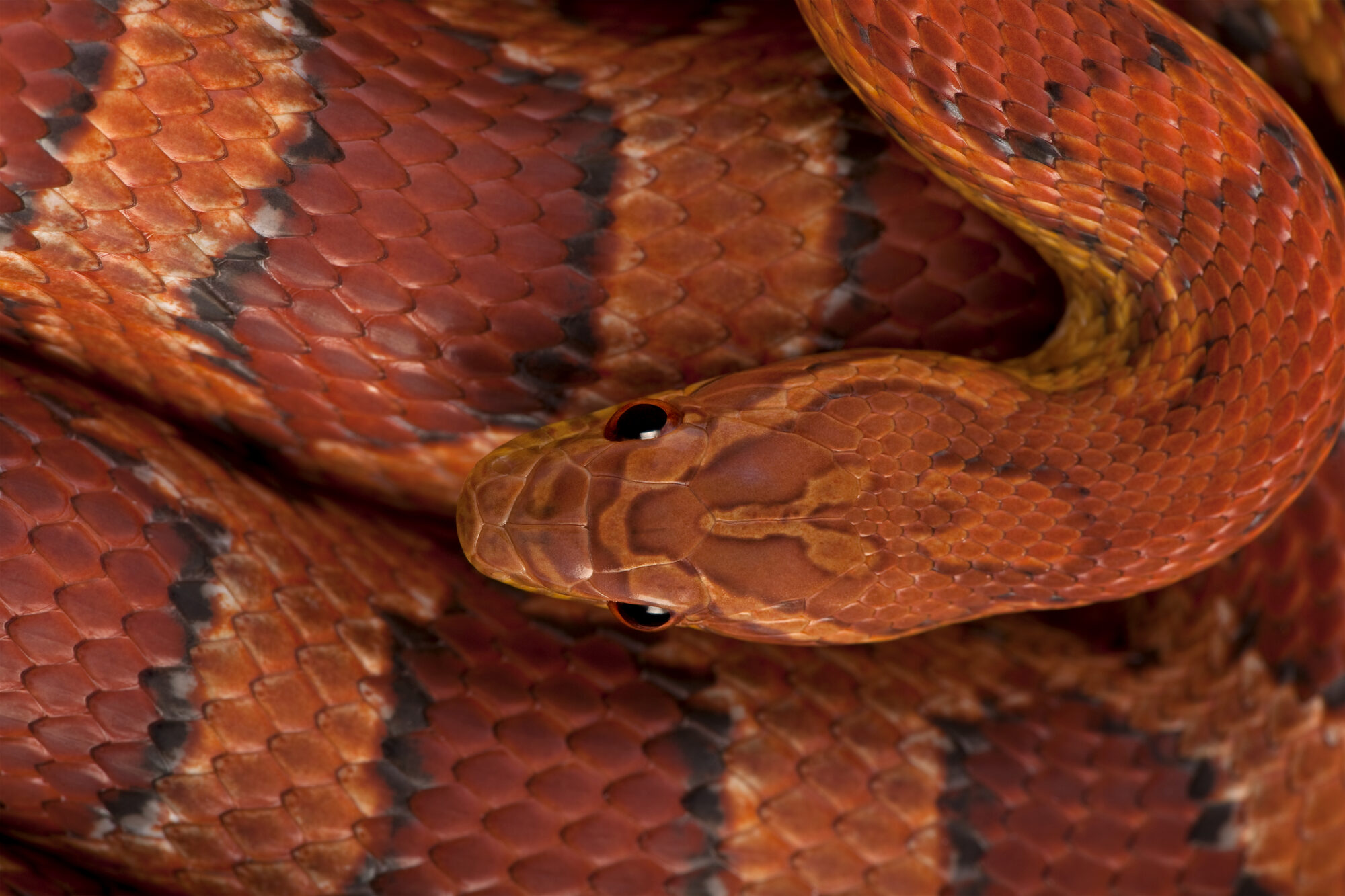
Corn Snake
Hardy, handleable, and endlessly varied in color — corn snakes are the benchmark for what a great beginner reptile should be.
Corn snakes are often called the perfect beginner snake, and they earn that reputation. Native to the southeastern United States, they are hardy, manageable in size, calm in temperament, and come in a dazzling array of color morphs. A healthy adult corn snake reaches 4 to 5 feet and is easy to handle. They are also very forgiving of minor husbandry mistakes, making them a great first reptile for adults and older children. With proper care, corn snakes commonly live 15 to 20 years.
Diet & Feeding
Corn snakes eat pre-killed or frozen-thawed mice. Juveniles eat pinky or fuzzy mice every 5 to 7 days. Adults eat adult mice every 7 to 10 days. Match prey size to the widest point of the snake's body. Always thaw frozen mice in warm water before offering. Corn snakes are generally enthusiastic feeders and rarely go off food except during shedding or the winter months if temperatures drop.
Housing & Habitat
A hatchling can start in a small enclosure (10 gallon), but adults need at least a 40-gallon enclosure or a 4-foot by 2-foot PVC enclosure. Provide at least two hides — one on the warm side and one on the cool side. Substrate options include aspen shavings (a classic choice), coconut fiber, or cypress mulch. Corn snakes are good escape artists, so a secure lid with clips is essential.
Temperature & Lighting
The warm side should be 85 to 88 degrees Fahrenheit. The cool side should be 72 to 78 degrees. Corn snakes do not need very high temperatures and will tolerate a range of ambient temperatures well. Under-tank heaters or radiant heat panels on a thermostat work well. Corn snakes do not require UVB lighting, though low-level exposure may be beneficial. Avoid heat rocks, which can cause burns.
Handling & Temperament
Corn snakes are excellent handling snakes. They are curious, active, and rarely bite once accustomed to handling. Give a new snake two weeks to settle before regular handling sessions. Never handle within 48 hours of feeding. Most corn snakes become very comfortable being out and exploring. Their tendency to explore and their active nature makes them engaging to interact with.
Health Notes
Corn snakes are extremely hardy and health issues are uncommon with proper husbandry. Common problems include respiratory infections from cold temperatures, mites, and mouth rot. Incomplete sheds usually indicate low humidity — provide a moist hide (a hide with damp sphagnum moss) to help. Any snake with wheezing, mucus, or unusual posture should see a reptile vet.