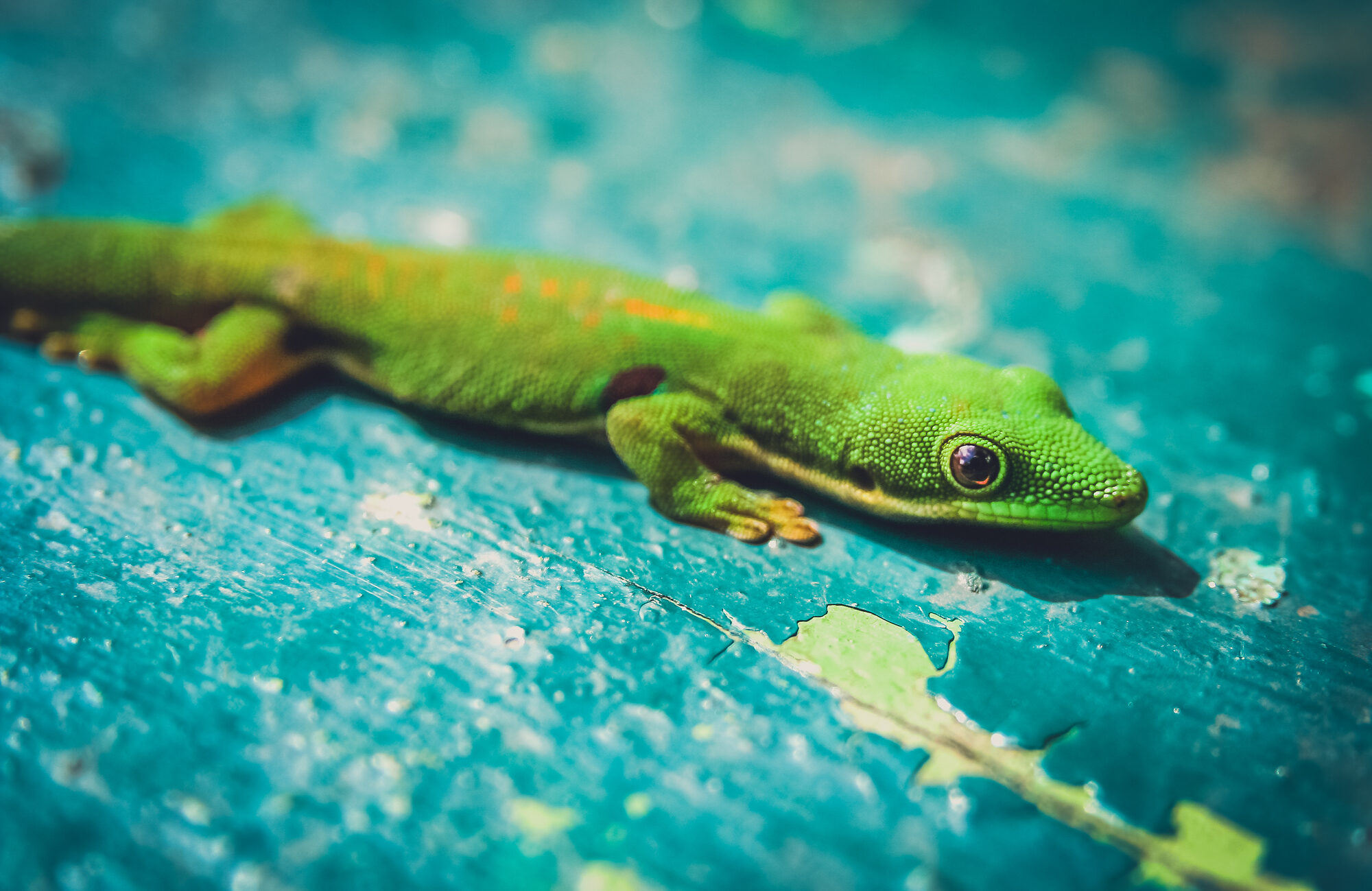
Day Gecko
Jewel-bright and best enjoyed from a distance — day geckos are living artwork for a beautifully planted vivarium.
Day geckos are some of the most visually stunning lizards you can keep. Native to Madagascar and surrounding islands, these vivid emerald green geckos with red and blue markings are a jewel for any bioactive vivarium. Unlike many reptiles, they are active during the day, making them great display animals. They are not handling pets — they are delicate and fast — but they are endlessly engaging to observe. Phelsuma grandis (giant day gecko) is the most commonly kept species and can live 10 to 15 years.
Diet & Feeding
Day geckos are omnivores that eat both insects and fruit-based foods. Feeder insects should include small dubia roaches, fruit flies, small crickets, and waxworms as treats. Dust insects with calcium and vitamin supplements several times per week. Equally important are fruit-based crested gecko diets (like Repashy or Pangea), which they lap up eagerly from small cups or bottle caps placed in the enclosure. Change these every day or two to prevent mold. Nectar and pollen are also natural dietary components.
Housing & Habitat
Day geckos need a tall, vertical enclosure to allow climbing — a 18x18x36 or larger vivarium works well for a pair or single adult. A bioactive setup with live plants (pothos, bromeliads, ficus) is ideal and mirrors their natural habitat. They need tight-fitting screened lids because they are fast and can squeeze through small gaps. Glass front-opening terrariums work well. Cork bark rounds make excellent hides and climbing surfaces.
Temperature & Lighting
The basking spot should reach 95 to 100 degrees Fahrenheit. Ambient temperature should be 78 to 85 degrees during the day and can drop to 70 to 75 degrees at night. UVB lighting is important for day geckos — use a T5 HO bulb appropriate to the enclosure size. Humidity should be maintained at 60 to 80 percent with daily misting. They will drink water droplets from leaves, so a light morning misting replicates their natural environment.
Handling & Temperament
Day geckos are not typically handling pets. They are extremely fast, stress easily, and their skin is very delicate — grabbing them can cause the skin to tear. Observe and enjoy them in their enclosure. With very patient desensitization over a long period, some individuals may become more tolerant, but they will never be as handleable as a leopard gecko or blue tongue skink.
Health Notes
Metabolic bone disease from insufficient UVB or calcium is a primary concern. Skin shedding problems, bacterial infections, and internal parasites can also occur. A healthy day gecko will be bright green, alert, and have a full tail. Stress causes their color to darken. Annual vet checkups with a reptile specialist are recommended.