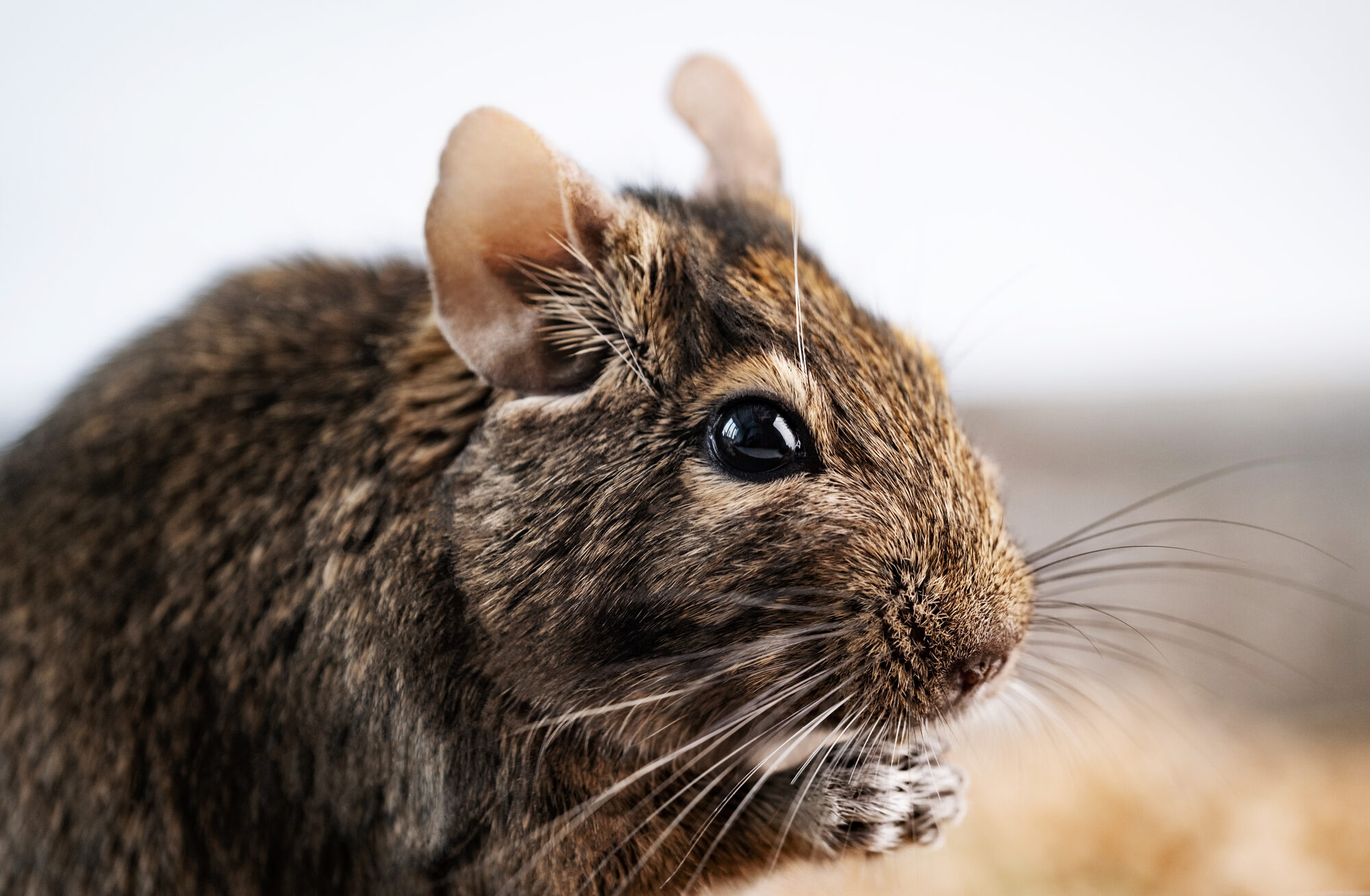
Degu
Active, clever, and best kept in social groups — degus are like a livelier, more sociable version of the chinchilla.
Degus are highly social, intelligent small rodents native to Chile. They look like a cross between a rat and a squirrel and are known for their inquisitive, active personalities. Degus are strongly social and should almost always be kept in same-sex pairs or groups — a lone degu will become stressed and depressed. They are diurnal (active during the day), which makes them great companions for people who want to interact with their pet during waking hours. With proper care, degus can live 6 to 8 years.
Diet & Feeding
Degus are herbivores with a very specific dietary restriction — they are extremely prone to diabetes and cannot process sugar. Their diet should consist primarily of high-quality timothy hay, which should be available at all times. Supplement with small amounts of degu-specific pellets or plain chinchilla pellets. Fresh herbs and leafy greens in small quantities are a good addition. Avoid fruits, carrots, corn, seeds, and any sugary treats entirely. Fresh water must always be available.
Housing & Habitat
Degus need a large, multi-level cage — bigger is always better for these active animals. Wire cages with solid floors (no wire mesh) and multiple platforms, hammocks, and hiding spots work well. They are enthusiastic chewers, so wooden toys and accessories will be destroyed (which is normal and healthy). Provide nesting material and bedding such as paper-based bedding or meadow hay. Clean the cage weekly and spot clean daily.
Temperature & Lighting
Degus prefer cooler temperatures between 65 and 75 degrees Fahrenheit. Like chinchillas, they are susceptible to heat stroke above 77 to 80 degrees. Keep them away from direct sunlight and heat sources. They do not require any special lighting beyond normal ambient household light.
Handling & Temperament
Degus can be tamed with consistent, patient handling. Start with hand feeding treats (appropriate ones, not sugary) and allow them to come to you. Never grab them by the tail — the skin can detach (called degloving) as a defense mechanism. Once comfortable, many degus enjoy exploring, climbing on their owners, and interacting. They communicate with a range of vocalizations and are quite expressive.
Health Notes
Diabetes is the most significant health concern in degus — it is usually diet-related and largely preventable with proper feeding. Dental disease (from inadequate hay) is also a major concern. Cataracts (often diabetes-related), respiratory infections, and cataracts are other possibilities. Find a small exotic vet who is knowledgeable about degus, as not all vets have experience with them.