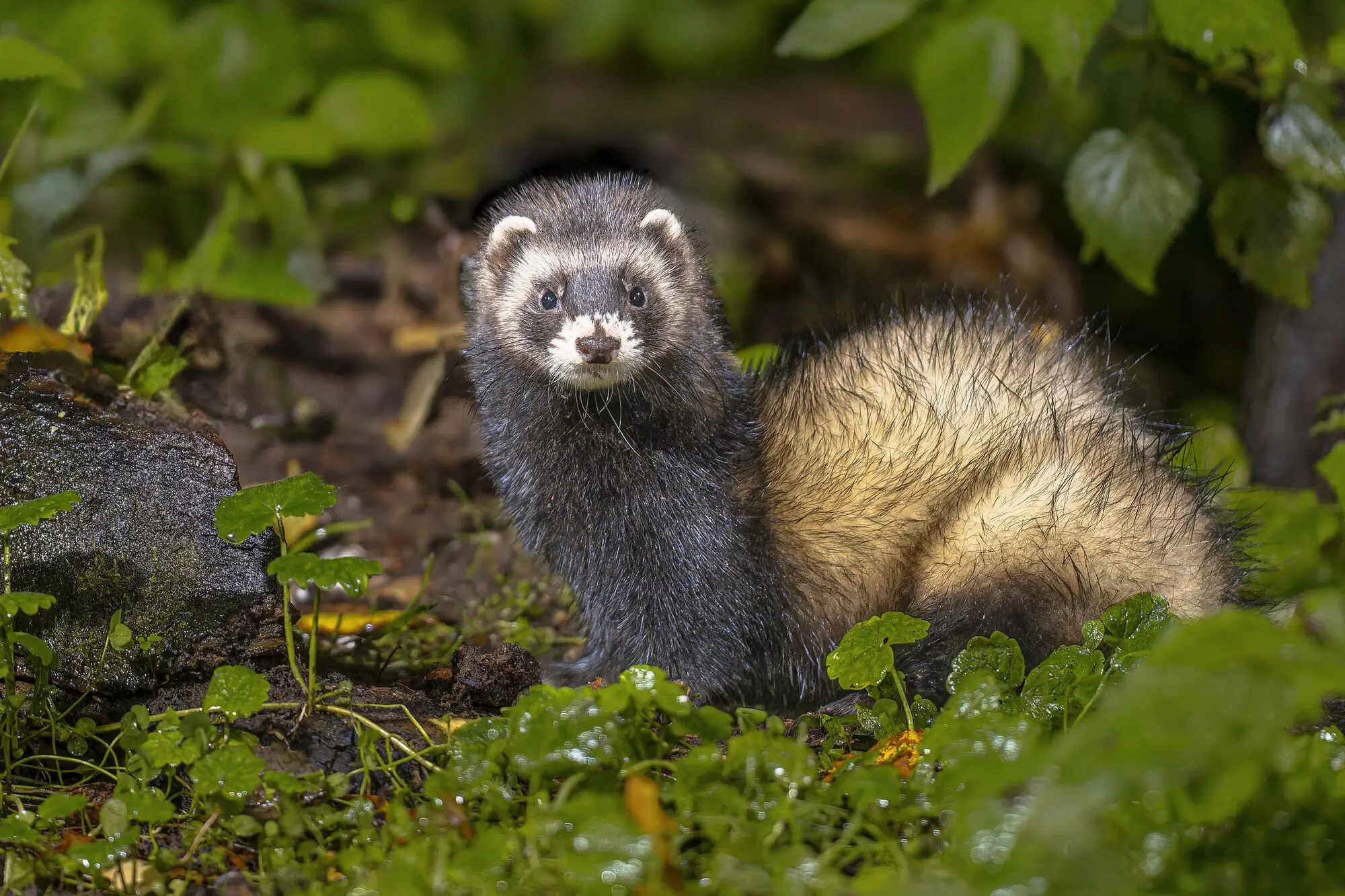
Ferret
Chaotic, affectionate, and absolutely unforgettable — ferrets pack more personality per pound than almost any other small pet.
Ferrets are mischievous, playful, and endlessly entertaining. They are obligate carnivores that are actually domesticated members of the weasel family. Ferrets are known for their characteristic "dooking" — a clucking noise they make when excited — and the "weasel war dance," their signature sideways hopping play behavior. They are social animals that thrive with companionship, either from humans or other ferrets. They require more attention than many small pets, but the reward is a deeply interactive and fun companion. With proper care, ferrets typically live 5 to 8 years.
Diet & Feeding
Ferrets are obligate carnivores and need a high-protein, high-fat, low-carbohydrate diet. High-quality ferret kibble (with meat as the first ingredient) is the most practical option. A raw diet mimicking their natural prey diet is also popular. Avoid foods with corn, wheat, or any plant protein as main ingredients — ferrets cannot digest these well. Do not feed fruit, vegetables, or dairy. Fresh water must always be available. Free feeding (leaving food available at all times) is generally recommended since ferrets have high metabolisms.
Housing & Habitat
Ferrets need a large, multi-level cage — minimum 3 feet wide by 2 feet deep, ideally larger. Wire cages with solid floors (wire hurts their feet) and multiple levels, hammocks, and hiding tubes work well. Ferrets need at least 3 to 4 hours of supervised out-of-cage time daily in a ferret-proofed area. They are escape artists and can squeeze through surprisingly small gaps. Ferret-proofing your space means blocking under furniture and appliances, covering vents, and removing anything toxic or small enough to swallow.
Temperature & Lighting
Ferrets are sensitive to heat and should be kept between 60 and 75 degrees Fahrenheit. Temperatures above 80 degrees can cause heat stroke. They tolerate cool temperatures well. Normal household air conditioning is typically sufficient.
Handling & Temperament
Ferrets are highly interactive and love playing with their owners. Most enjoy being held, carried, and roughhousing. Nipping can be an issue, especially in kits (young ferrets) — consistent training (saying "no" and gently putting them down) helps. Ferrets have poor eyesight but excellent hearing and smell. They are curious about everything and will explore any accessible space.
Health Notes
Ferrets are prone to several diseases, particularly as they age. Adrenal disease, insulinoma (pancreatic tumors causing low blood sugar), and lymphoma are very common in ferrets over 3 years old. Annual vet visits starting at a young age are important. Vaccinations against canine distemper and rabies are required. Heartworm prevention is also recommended. Signs of illness include weight loss, lethargy, hair loss (adrenal disease), and seizures or episodes of weakness (insulinoma).