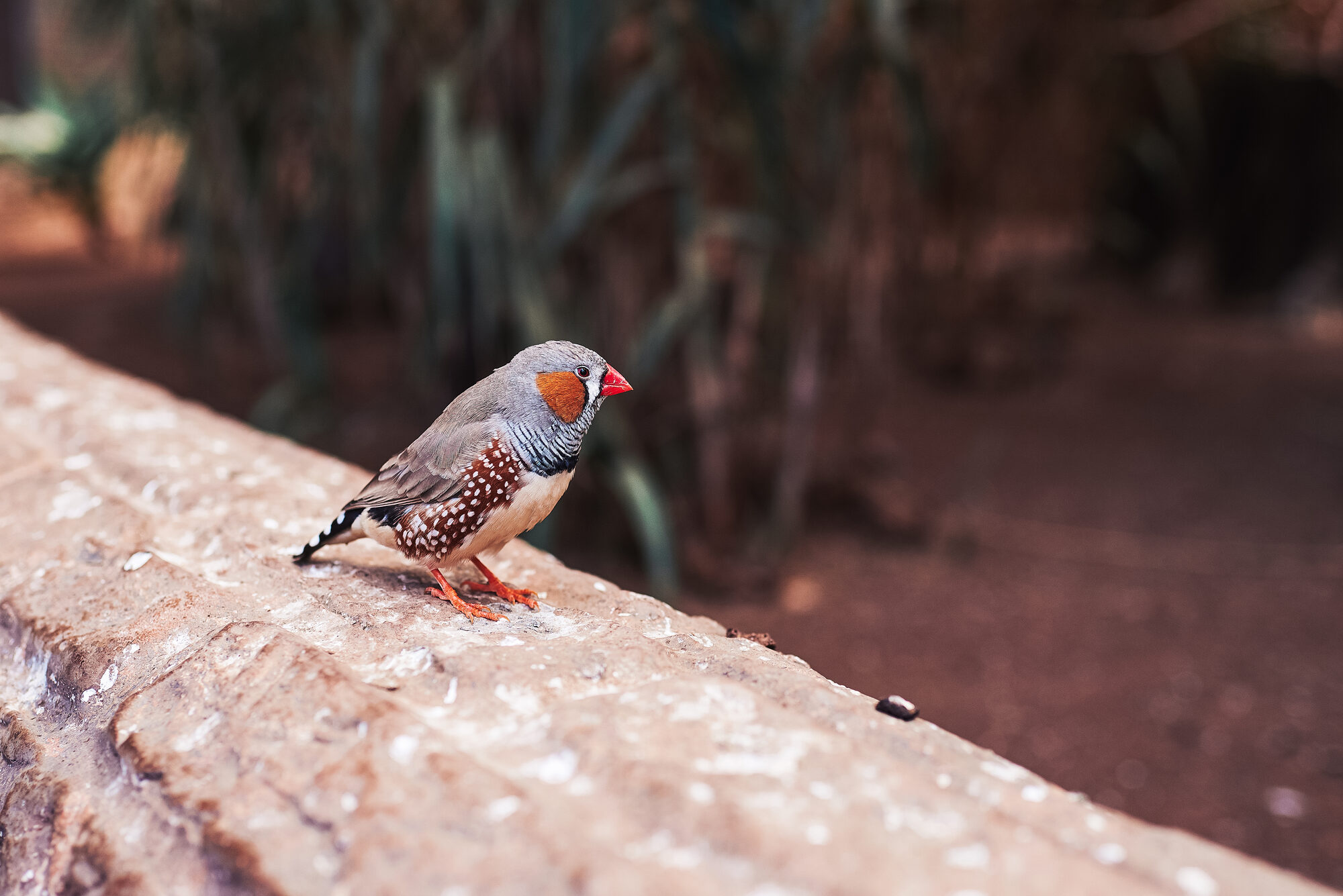
Finch
Low-key and beautiful to observe — finches thrive in pairs and bring life and song to any room without demanding your attention.
Finches are small, lively birds that are ideal for bird lovers who enjoy watching rather than handling. They are better suited to living as pairs or small flocks, where they can interact with each other and display their natural social behaviors. Zebra finches and society finches are the most commonly kept species and are great for beginners. Finches are relatively low-maintenance compared to parrots, but they still need proper care to thrive. With good husbandry, finches can live 5 to 12 years depending on species.
Diet & Feeding
The base of a finch diet is a high-quality finch seed mix, but seeds alone are not nutritionally complete. Supplement with high-quality finch pellets, fresh greens like spinach and kale, egg food, and sprouted seeds. Soft foods like cooked egg with shell (for calcium) are excellent. Fresh water should be changed daily. Avoid avocado, onion, garlic, and any salty or sugary processed foods.
Housing & Habitat
Finches need a horizontal cage that allows flight — a cage that is wider than it is tall is preferable, minimum 30 inches wide for a pair. Bar spacing should be no more than half an inch. Provide multiple natural wood perches of varying diameters, nesting material, and foraging opportunities. Finches housed in pairs or small groups are much happier than solitary birds. If keeping mixed-sex pairs, be prepared for breeding attempts.
Temperature & Lighting
Finches are comfortable at typical household temperatures of 65 to 80 degrees Fahrenheit. They are sensitive to drafts and sudden temperature drops. Avoid placing their cage near windows that get cold at night or near air conditioning vents. Natural light exposure supports their health and helps maintain natural activity patterns.
Handling & Temperament
Unlike parrots or cockatiels, most finches do not enjoy being handled and find it stressful. Their enjoyment and well-being come from their avian companions, their environment, and the ability to fly freely within their cage or aviary. Some hand-raised individuals may be more tolerant, but as a general rule, finches are best appreciated as interactive display animals rather than lap birds.
Health Notes
Common health issues in finches include air sac mites (a serious respiratory condition causing clicking sounds when breathing), feather problems, egg binding in breeding females, and scaly face mite. A bird that is sitting fluffed up on the bottom of the cage is seriously ill and needs immediate veterinary attention. Annual vet visits with an avian vet experienced in small birds are recommended.