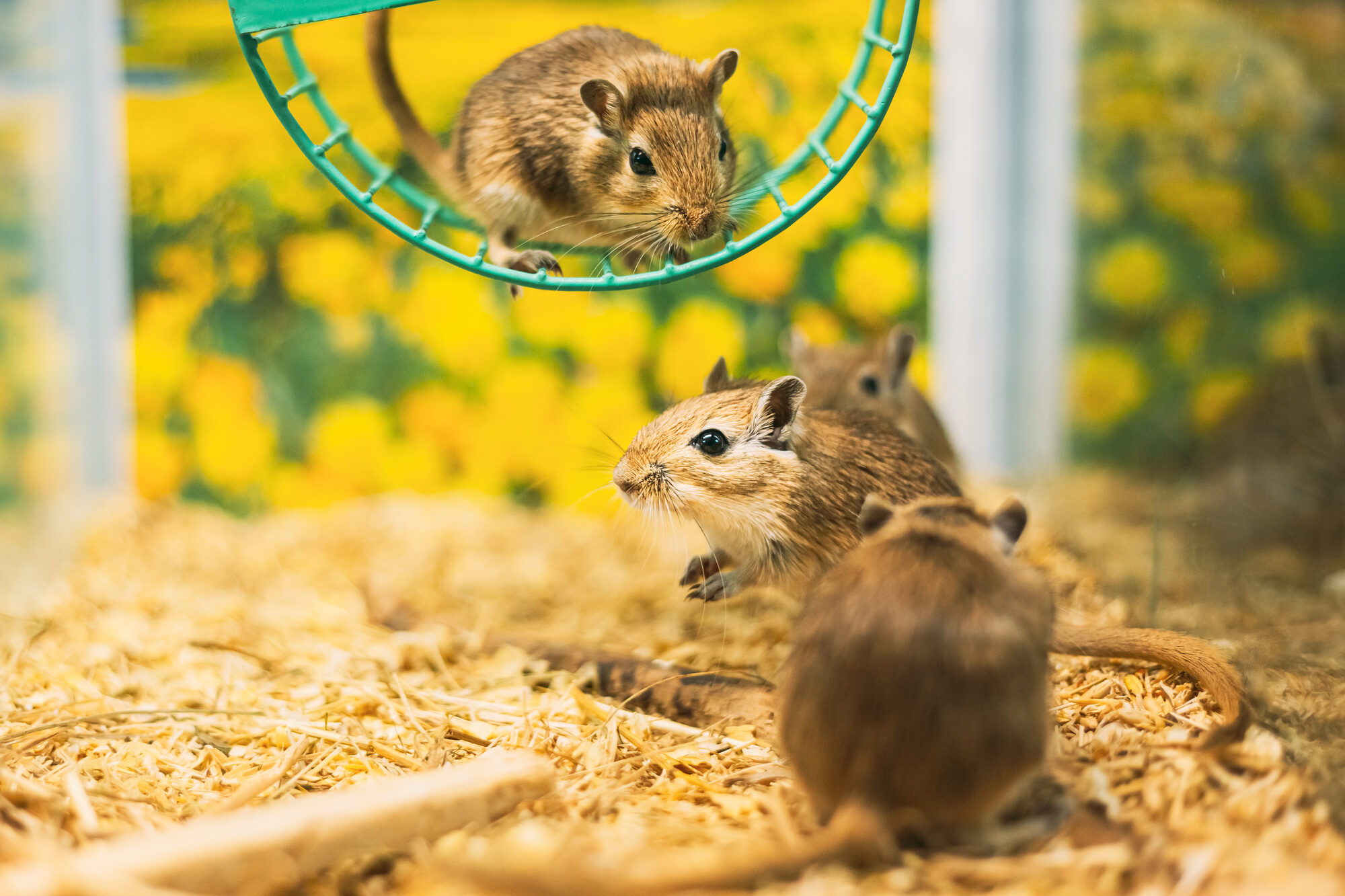
Gerbil
Curious, social, and built to burrow — gerbils are engaging little rodents that are great fun to watch in an enriched tank.
Gerbils are small, curious, and incredibly active rodents that make engaging pets. Native to the arid regions of Central Asia and Africa, they are built for digging and exploring. Gerbils are social creatures and are happiest in same-sex pairs or small groups — lone gerbils can become stressed and lethargic. They are diurnal, meaning they are active during the day and sleep at night, making them convenient companions. With proper care, gerbils typically live 3 to 5 years.
Diet & Feeding
Gerbils do best on a high-quality gerbil or hamster seed mix combined with gerbil pellets. Supplement with small amounts of fresh vegetables like broccoli, cucumber, and leafy greens. Avoid sugary foods and fruits in excess. Timothy hay should also be available — it aids digestion and gives them something to chew. Fresh water should always be available, preferably from a water bottle to keep it clean.
Housing & Habitat
Gerbils love to dig and burrow, so their ideal home is a glass tank (a gerbilarium) with deep substrate rather than a wire cage. A 10-gallon tank works for a pair, but larger is better. Fill it with at least 6 to 8 inches of a substrate mix of bedding and coconut fiber that they can tunnel through. Provide a nest box, gnawing materials, tunnels, and an exercise wheel (solid, not wire). Clean the enclosure partially every 1 to 2 weeks.
Temperature & Lighting
Gerbils are comfortable in typical room temperatures of 65 to 75 degrees Fahrenheit. They should not be placed in direct sunlight or near heat sources. They are less sensitive to heat than chinchillas or degus, but temperatures above 80 degrees are still uncomfortable for them.
Handling & Temperament
Gerbils are generally friendly and curious but fast-moving. Handle them close to a surface where a jump will not injure them. Never grab them by the tail — it can detach. Regular handling from a young age helps them become comfortable with people. Many gerbils will sit in your hand, climb on you, and explore their surroundings. They are quick learners and can be taught simple behaviors with positive reinforcement.
Health Notes
Gerbils are generally hardy, but common health issues include tumors (especially scent gland tumors), epileptic-like seizures (which can be inherited), dental issues, and respiratory infections. Seizures in gerbils are not always serious — some gerbils have mild seizures when stressed or overstimulated and recover quickly. Any gerbil with persistent seizures, weight loss, or abnormal behavior should see a small animal vet.