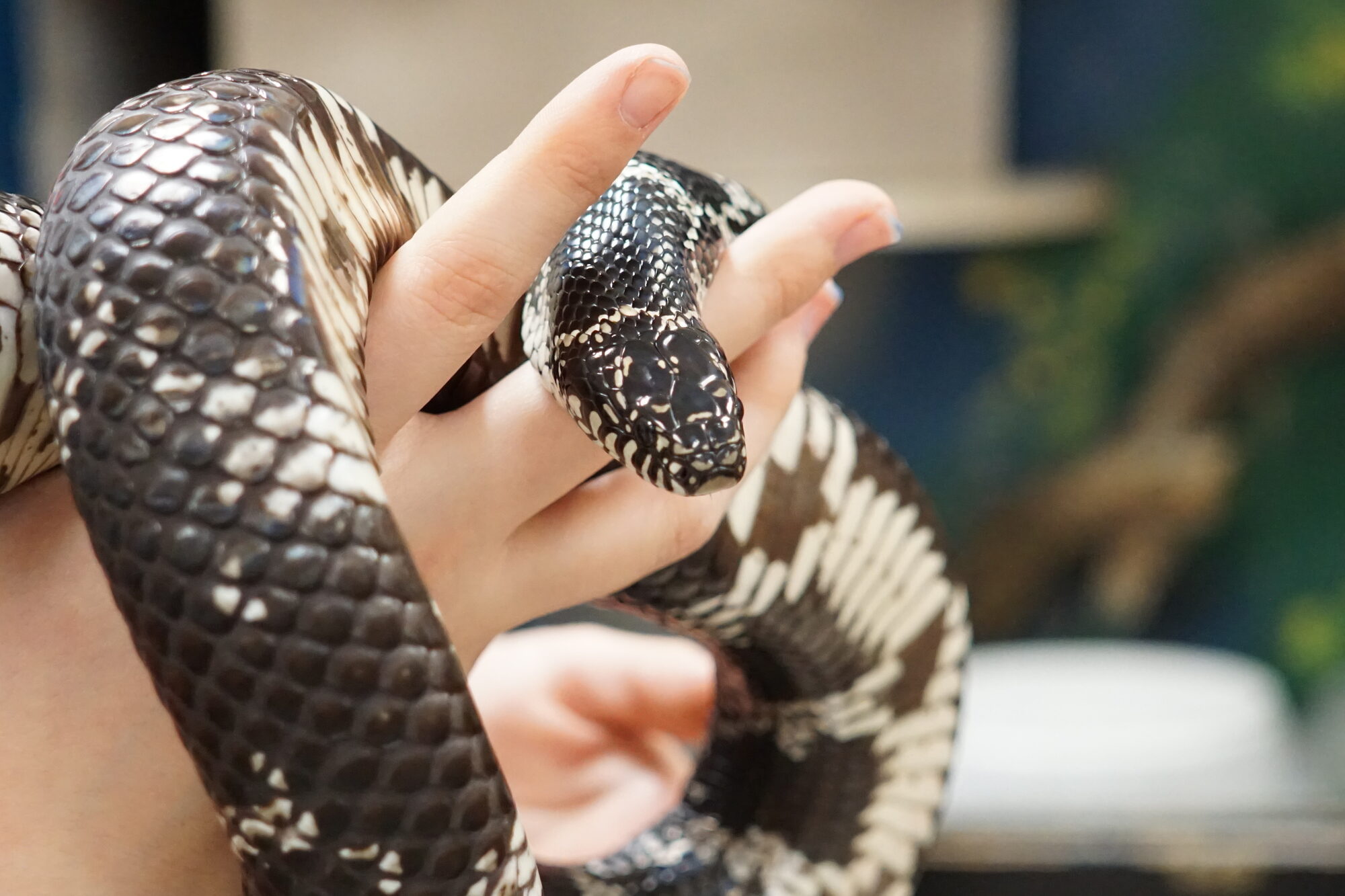
King Snake
Bold, hardy, and immune to rattlesnake venom — king snakes are an underrated gem in the pet snake world.
King snakes are excellent pet snakes that deserve more recognition. They are bold, hardy, and come in beautiful banded and striped patterns. The California kingsnake is the most commonly kept species, but eastern, Florida, and Mexican black kingsnakes are also popular. They are naturally found across North America and are known as king snakes because they eat other snakes — including venomous ones, as they are immune to pit viper venom. In captivity, they are fed rodents and are generally quite handleable. With good care, king snakes live 15 to 20 years.
Diet & Feeding
King snakes eat pre-killed or frozen-thawed mice and rats, sized appropriately to the width of the snake. Juveniles eat every 5 to 7 days. Adults eat every 10 to 14 days. King snakes can be enthusiastic and slightly bitey during feeding — using feeding tongs and a distinct feeding ritual helps them associate the tongs (not your hand) with food. Never feed live prey.
Housing & Habitat
Juveniles can be housed in a 10 to 20-gallon enclosure. Adults need at least a 40-gallon tank or 4-foot by 2-foot PVC enclosure. King snakes are generally escape artists — a secure lid is non-negotiable. Substrate options include aspen shavings, cypress mulch, or paper towels. Provide at least two hides and a water dish. King snakes should be housed separately — their instinct is to eat other snakes, including cage mates.
Temperature & Lighting
The warm side should be 85 to 88 degrees Fahrenheit with a cool side around 72 to 78 degrees. Under-tank heaters or radiant heat panels on a thermostat work well. King snakes do not require UVB lighting. Humidity should be moderate — around 40 to 60 percent. King snakes are tolerant of a range of temperatures and are quite hardy.
Handling & Temperament
King snakes are generally curious and active during handling. Some individuals can be defensive initially, especially juveniles, and may musk (release an unpleasant odor) or strike. Regular handling sessions help most calm down. Use a hook initially to avoid feeding-response bites. Once tame, they are typically excellent handling snakes. Avoid handling during shedding or within 48 hours of feeding.
Health Notes
King snakes are among the hardiest captive snakes. Common health issues include respiratory infections from cold or damp conditions, mites, and mouth rot. Regurgitation can occur if handled too soon after feeding or if prey is too large. Annual fecal tests for parasites are a good preventive measure.