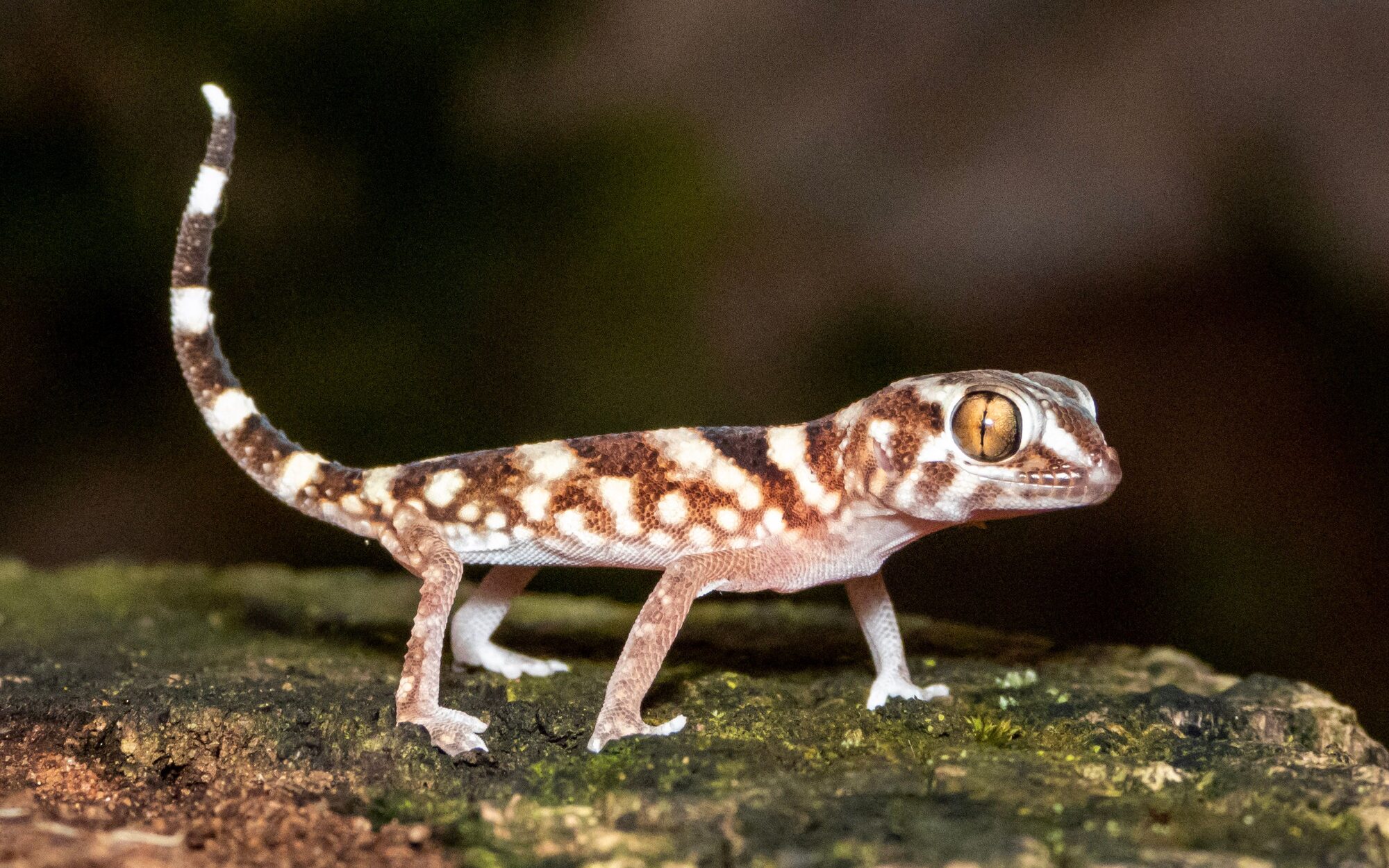
Large Tailed Gecko
Calm, chunky, and captivating — fat-tailed geckos offer everything to love about leopard geckos with their own West African twist.
The large tailed gecko, also known as the fat-tailed gecko (Hemitheconyx caudicinctus), is native to West Africa and is closely related to the leopard gecko. They are a fantastic alternative for keepers who love leopard geckos but want something a bit different. Fat-tailed geckos are calm, terrestrial, and come in a range of beautiful morphs. They are slightly more demanding in terms of humidity than leopard geckos but equally handleable. With proper care, they can live 15 to 20 years.
Diet & Feeding
Fat-tailed geckos eat insects. Dubia roaches and crickets are the primary feeders. Mealworms and waxworms can be offered as occasional treats but should not be the staple due to high fat content. Juveniles should be fed every 1 to 2 days. Adults eat every 2 to 3 days. Dust insects with calcium powder at every feeding and a multivitamin supplement twice per week. Prey size should not exceed the width of the gecko's head. Always remove uneaten insects from the enclosure.
Housing & Habitat
A 20-gallon enclosure is adequate for one or two adult fat-tailed geckos. Like leopard geckos, they are terrestrial and need floor space over height. Provide a warm hide, a cool hide, and a humid hide filled with damp sphagnum moss — this is essential for successful sheds. Substrate can be coconut fiber, paper towels, or a mix. Avoid coarse sand or loose substrate for juveniles due to impaction risk.
Temperature & Lighting
The warm side should be 88 to 92 degrees Fahrenheit. The cool side should be around 75 to 80 degrees. Use an under-tank heater regulated by a thermostat. UVB lighting is not strictly required but is beneficial. Crucially, fat-tailed geckos need higher humidity than leopard geckos — aim for 50 to 70 percent ambient humidity, with a humid hide always available. Regular light misting helps.
Handling & Temperament
Fat-tailed geckos are typically very calm and easy to handle. They are slower and more methodical than many geckos. Most accept regular handling without stress. New geckos should be given 2 weeks to settle before handling. Support their body fully, and avoid grabbing at the tail — like many geckos, they can drop it as a defense (though it does regrow). Start with short sessions and build up over time.
Health Notes
Stuck sheds (dysecdysis) from insufficient humidity are the most common issue. Check that the skin shed completely, especially around the toes and eyes. Metabolic bone disease from inadequate calcium or vitamin supplementation is also a concern. Respiratory infections, cryptosporidiosis, and mouth rot can occur but are less common with proper care.