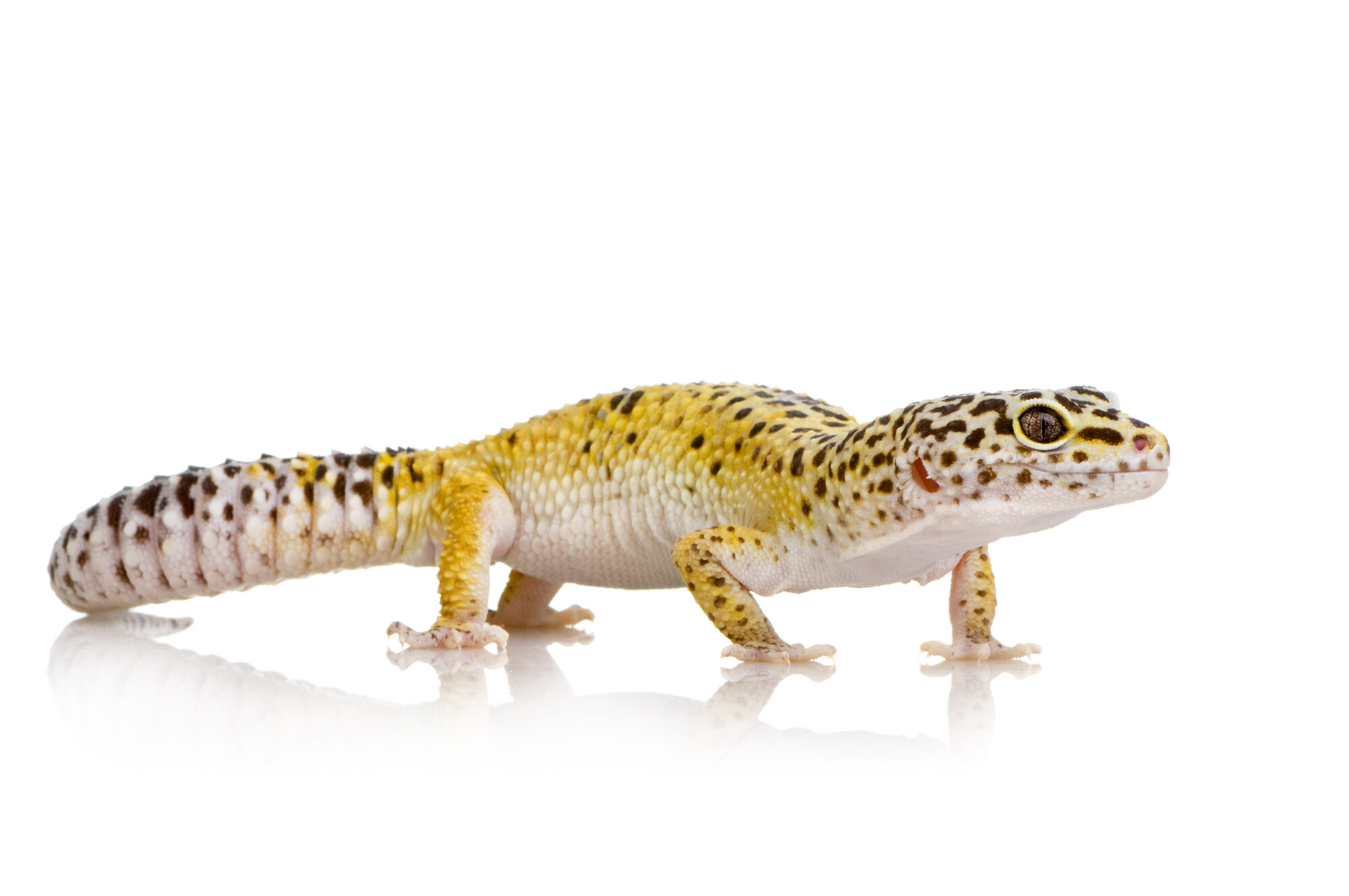
Leopard Gecko
The ideal first reptile and a lifelong favorite — leopard geckos are calm, handleable, and come in striking color varieties.
Leopard geckos are one of the most popular pet lizards in the world, and they have earned that status. They are hardy, docile, manageable in size, and relatively straightforward to care for. Native to the arid regions of South Asia and the Middle East, leopard geckos are terrestrial, ground-dwelling lizards that are active primarily at dawn and dusk. They come in an enormous variety of captive-bred color morphs. With good care, a leopard gecko can live 15 to 20 years, making them a long-term companion.
Diet & Feeding
Leopard geckos are insectivores. Their primary foods are dubia roaches and crickets. Mealworms are acceptable in moderation. Waxworms are a high-fat treat to be offered occasionally. Juveniles should be fed every day or every other day. Adults eat every 2 to 3 days. Dust insects with calcium powder at most feedings and use a multivitamin supplement 1 to 2 times per week. Keep a small dish of calcium powder in the enclosure so they can self-supplement. Remove uneaten insects from the enclosure.
Housing & Habitat
An adult leopard gecko needs at least a 20-gallon long enclosure — bigger is always better. They are terrestrial, so floor space is more important than height. Provide a warm hide, a cool hide, and a moist hide filled with damp sphagnum moss or paper towels to assist with shedding. Substrate options include reptile carpet, paper towels, or tile — avoid loose sand for juveniles due to impaction risk. Adults on properly managed sand or soil substrates do fine.
Temperature & Lighting
The warm side should reach 88 to 92 degrees Fahrenheit. The cool side should be 74 to 80 degrees. Use an under-tank heater regulated by a thermostat — never use heat rocks. Leopard geckos are crepuscular, so they do not require UVB lighting, though low-level UVB may offer health benefits. Humidity should be low (30 to 40 percent) except in the moist hide.
Handling & Temperament
Leopard geckos are among the best reptiles for regular handling. Most are calm, curious, and tolerant of interaction. Give new geckos 2 weeks to acclimate before handling. Start with short 5 to 10 minute sessions and build up. Avoid handling during shedding. Never grab the tail — if threatened, geckos can drop it (tail autotomy), though it does regrow. Move slowly and let the gecko walk from hand to hand.
Health Notes
Incomplete sheds, especially stuck eye caps and toe tips, are the most common issue — the moist hide prevents this. Cryptosporidiosis is a serious parasitic infection causing significant weight loss and is unfortunately common. Metabolic bone disease from insufficient calcium, impaction from loose substrate, and mouth rot are other concerns. A reptile vet visit for a new gecko is a good investment.