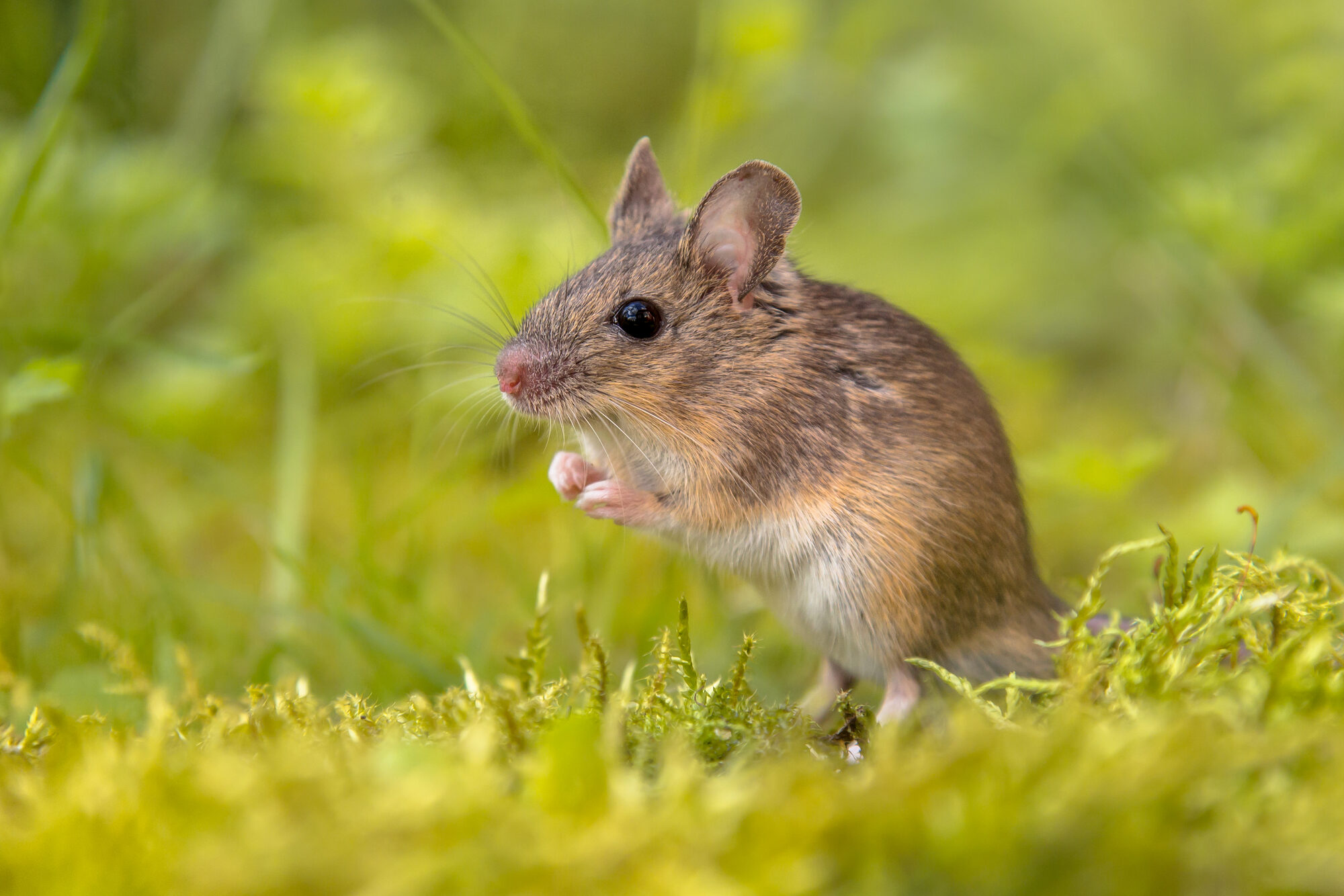
Mouse
Small in size, big on character — mice are playful and curious pets that are genuinely fun to watch in an enriched setup.
Mice are small, curious, and surprisingly engaging pets that are often overlooked in favor of rats. They are inexpensive to keep, take up minimal space, and are fascinating to watch in an enriched environment. Female mice can be kept in social groups and enjoy company. Male mice are typically kept alone due to fighting, though some exceptions exist. Mice are most active in the evening and at night. They are gentle and can be hand-tamed, though they are fast and take some patience. With good care, mice live 1.5 to 3 years.
Diet & Feeding
A high-quality mouse or rat block pellet provides complete nutrition. Supplement with small amounts of fresh vegetables like broccoli, cucumber, and leafy greens. Whole grain crackers, seeds, and occasional protein (cooked chicken, mealworms) are good enrichment foods. Fresh water should always be available. Avoid sugary treats, citrus, and onion.
Housing & Habitat
Mice are active and need more space than typical pet store cages offer. A 10-gallon tank with a secure mesh lid, or a well-ventilated plastic bin cage, works well for a small group. Provide several inches of paper-based bedding for burrowing, a nest box, an exercise wheel (solid surface, minimum 8 inches), climbing structures, and hiding spots. Spot clean weekly and deep clean monthly.
Temperature & Lighting
Mice are comfortable at typical room temperatures of 65 to 75 degrees Fahrenheit. They should not be in direct sunlight or near drafts.
Handling & Temperament
Mice can be tamed with consistent, patient handling. Start by offering your hand in the cage and letting them come to you. Once comfortable, they will climb onto your hand readily. They are very fast and should be handled close to a surface. Cupped hands work better than flat ones. Regular daily interaction builds trust quickly.
Health Notes
Mice are prone to respiratory infections — a respiratory mouse pathogen called Sendai virus and other pathogens can spread quickly in a group. Tumors are also common, particularly in females. Skin mites cause scratching and hair loss. Check for abnormal lumps, changes in behavior, weight loss, or labored breathing. A vet familiar with small rodents can help when needed.