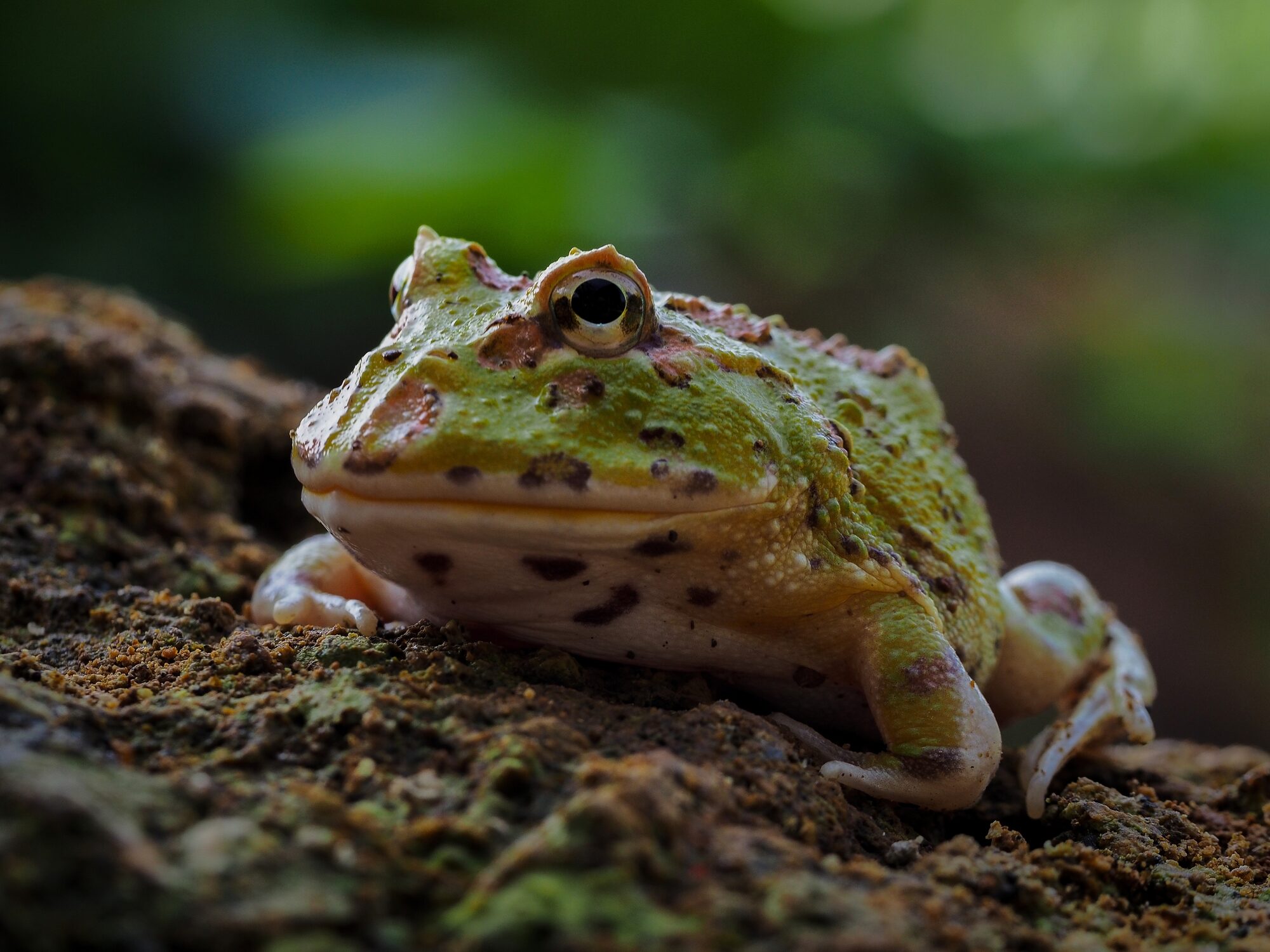
Pac-Man Frog
A round, grumpy ambush predator that barely moves but eats everything — Pac-Man frogs are effortlessly entertaining.
Pac-Man frogs, also known as South American horned frogs, are hilarious, low-maintenance pets that sit in their substrate and eat — enthusiastically. They are named for their round body and huge mouth, which genuinely resembles the famous video game character. They are sedentary ambush predators that barely move, making them ideal for keepers who want a striking pet that does not require a lot of space or activity. Despite their reputation for simplicity, they need specific care to stay healthy. With good care, Pac-Man frogs can live 6 to 10 years.
Diet & Feeding
Pac-Man frogs are voracious eaters that will attempt to eat almost anything that moves in front of them, including your fingers. Primary feeders include appropriately sized crickets, dubia roaches, earthworms, and occasional pinky mice for large adults. Prey should be no larger than the frog's head width. Dust insects with calcium and vitamin D3 supplement at every feeding. Feed juveniles every 2 to 3 days. Adults can be fed every 3 to 5 days — overfeeding leads to obesity, which is a serious problem in this species.
Housing & Habitat
Pac-Man frogs are terrestrial and sedentary. A 10-gallon enclosure is sufficient for one adult. They need coconut fiber or sphagnum moss substrate that stays moist — they burrow into it and absorb water through their skin. They should not be in standing water, but the substrate must be consistently damp. A shallow water dish is good for soaking. Provide a hide, though many prefer to just burrow into the substrate.
Temperature & Lighting
Temperature should be maintained between 75 and 82 degrees Fahrenheit. Low-level UVB lighting (2.0 or 5.0) for a few hours per day is a sensible addition recommended by many herpetoculturists. Humidity should be high — 60 to 80 percent. Mist daily to maintain moisture levels.
Handling & Temperament
Handle Pac-Man frogs minimally. Their skin is permeable and absorbs chemicals from your hands — always wash your hands thoroughly before handling, use dampened gloves if possible, and keep sessions brief. They will bite — hard — if they think you are food, so approach from behind and avoid presenting fingers near their mouth. Mostly, just enjoy watching them eat.
Health Notes
Toxic out syndrome is the most serious acute condition — it is caused by bacterial toxins in the water or substrate and causes seizures and death if not treated rapidly (rinse frog with clean water and see a vet immediately). Red leg (bacterial septicemia), impaction from eating substrate, and obesity from overfeeding are also major concerns. Ensure substrate never dries out completely.