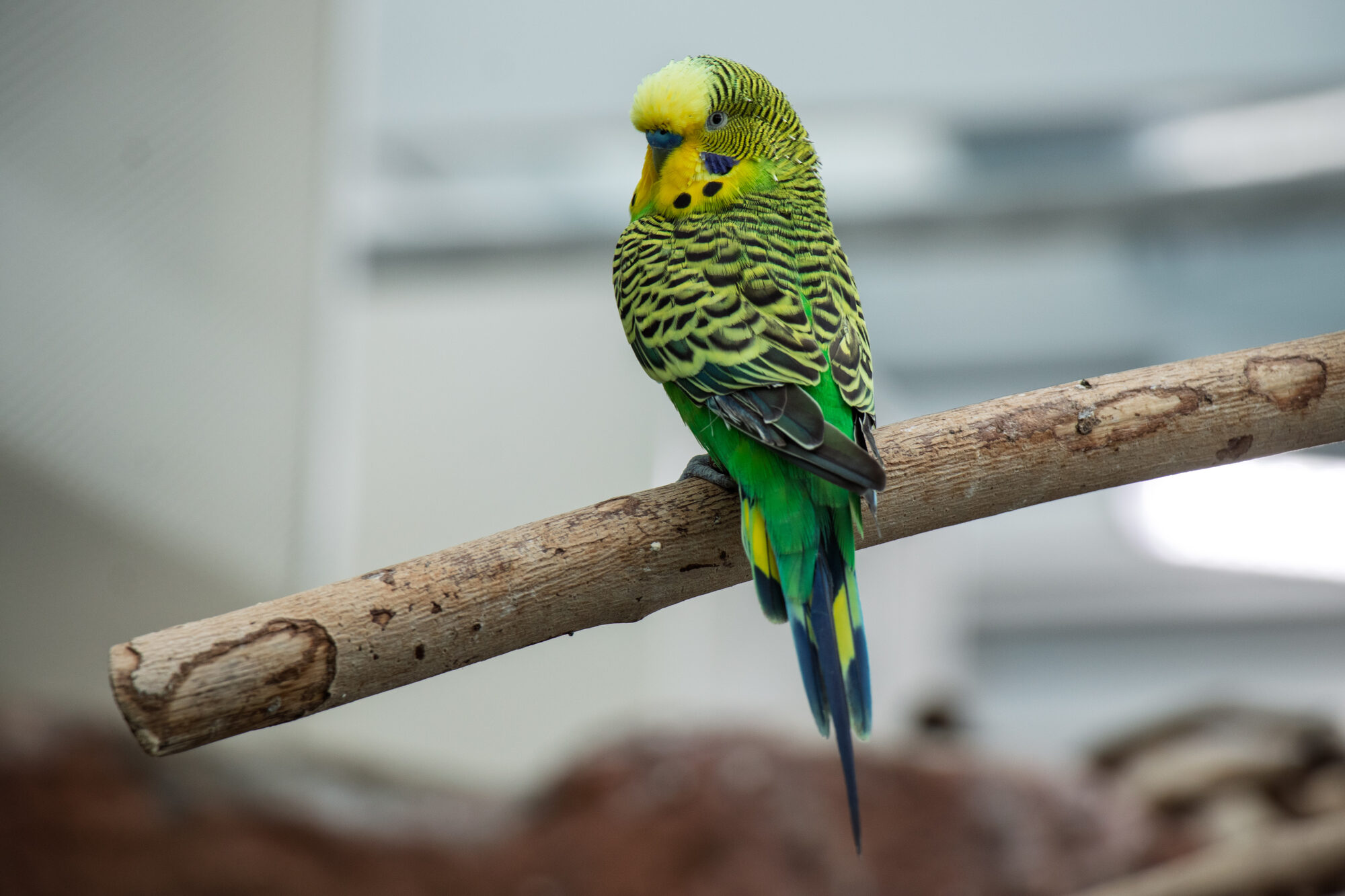
Parakeet
Tiny, talkative, and smarter than most people expect — budgies are one of the most rewarding birds you can keep.
Parakeets, also known as budgerigars or budgies, are one of the most popular pet birds in the world and the most widely kept parrot species. Native to Australia, they are intelligent, social, and highly trainable. Parakeets can learn to whistle tunes, mimic words and phrases, and genuinely enjoy interacting with their owners. They are a wonderful first bird for new bird owners and a delightful companion for experienced ones. With proper care, parakeets can live 8 to 15 years.
Diet & Feeding
A high-quality parakeet pellet should make up about 60 to 70 percent of a parakeet's diet — seeds alone are insufficient and contribute to fatty liver disease. Fresh vegetables are important: leafy greens, broccoli, carrots, and bell peppers are favorites. Small amounts of fruit are fine as treats. Fresh water should be changed daily. Avoid avocado, onion, garlic, chocolate, and caffeine, which are toxic to birds. Cuttlebone and mineral blocks provide calcium and beak conditioning.
Housing & Habitat
Parakeets need a cage large enough for them to fly — minimum 18 inches wide by 18 inches deep by 24 inches tall, larger if possible. Bar spacing should be no more than half an inch. Provide multiple perches of varying textures and diameters. Toys that encourage foraging and mental stimulation are important. Parakeets are social and do well in pairs or small groups. Parakeets need at least a couple of hours of out-of-cage time daily in a bird-safe space.
Temperature & Lighting
Parakeets are comfortable at typical household temperatures of 65 to 80 degrees Fahrenheit. They are extremely sensitive to non-stick (PTFE) cookware fumes, which can be fatal almost instantly. Avoid using non-stick pans in the kitchen if possible, or keep birds well away from any fumes. Aerosols, candles, and air fresheners should also be avoided near birds.
Handling & Temperament
Hand-raised parakeets are typically very comfortable with people and can be taught to step up onto a finger from an early age. Wild-caught or pet store birds may require more patience to tame. Speak softly, move slowly, and use positive reinforcement. Many parakeets learn to whistle back tunes, say words and phrases, and will actively seek interaction with their owners. Males tend to be better talkers than females.
Health Notes
Common health issues include psittacosis (a bacterial infection), respiratory infections, budgerigar fledgling disease, scaly face mite (causes crusty beak and cere), fatty liver disease from an all-seed diet, and tumors. Tumors are unfortunately very common in budgies. Annual exams with an avian vet and a diet transition to pellets are important preventive measures.