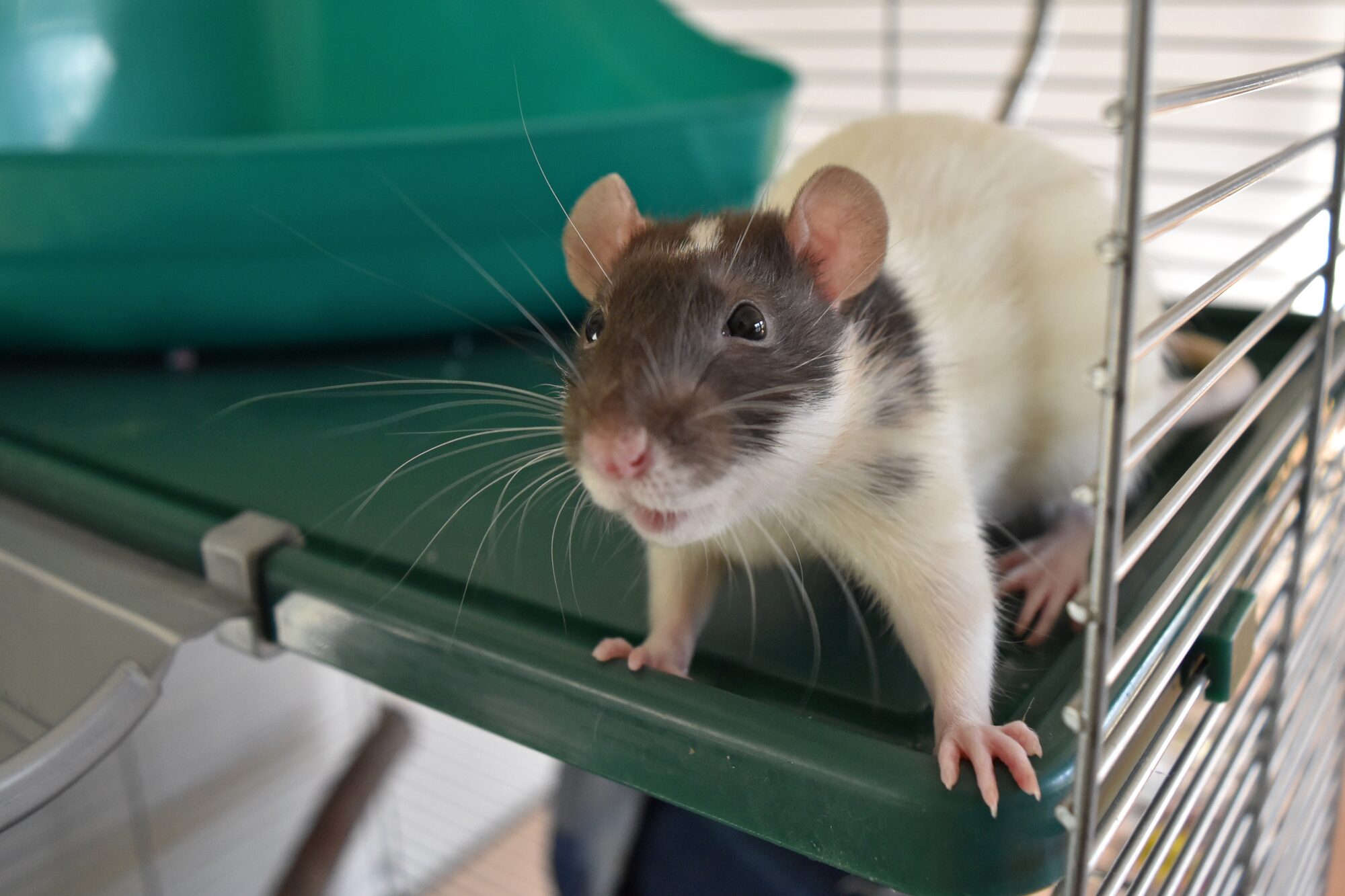
Rat
Arguably the best small pet you can own — rats are smart, social, and genuinely seem to enjoy the company of their people.
Rats are among the best small pets you can own. They are highly intelligent, social, and genuinely affectionate animals that form deep bonds with their owners. Unlike mice or hamsters, rats actively seek interaction, respond to their names, can be taught an impressive range of tricks, and enjoy being out and spending time with people. They should always be kept in same-sex pairs or groups — a solitary rat will be lonely and stressed. With good care, rats typically live 2 to 3 years.
Diet & Feeding
A high-quality rat block (such as Oxbow Regal Rat) provides the best nutritional foundation. Supplement daily with fresh vegetables: leafy greens, broccoli, peas, and bell peppers are excellent. Small amounts of fruit, whole grains, and cooked chicken or scrambled egg are also good additions. Avoid high-sugar or high-fat foods, citrus (can cause kidney damage in males), and blue cheese or licorice. Fresh water should always be available.
Housing & Habitat
Rats need large, vertically oriented cages with multiple levels — a Critter Nation or similar double unit is ideal. Minimum floor space is about 2 cubic feet per rat, but more is always better. Provide hammocks, ropes, climbing structures, nest boxes, and foraging opportunities. Substrate should be paper-based bedding or fleece. Spot clean daily and deep clean weekly. Rats need at least 1 to 2 hours of supervised out-of-cage time daily in a rat-proofed space.
Temperature & Lighting
Rats are comfortable at 65 to 75 degrees Fahrenheit. They should not be in direct sunlight or in temperatures above 80 degrees, where they risk heat stroke. Normal household air conditioning is fine.
Handling & Temperament
Rats are extremely people-oriented and most love being handled. They will climb over you, sit on your shoulder, take treats from your hand, and respond to their names. Building trust with a new rat requires patience — let them come to you initially, use treats, and keep early sessions calm. Rats rarely bite unless they are in pain or extremely frightened. They groom their owners as a sign of affection.
Health Notes
Respiratory infections from mycoplasmosis (a bacteria virtually all rats carry) are the most common health issue. Signs include clicking, sneezing, and labored breathing. Tumors — especially mammary tumors in females — are extremely common, often beginning after 12 to 18 months. Hind limb degeneration affects many older rats. Spaying females significantly reduces mammary tumor risk. Rats should see a small exotic vet regularly, ideally every 6 months given their short lifespan.