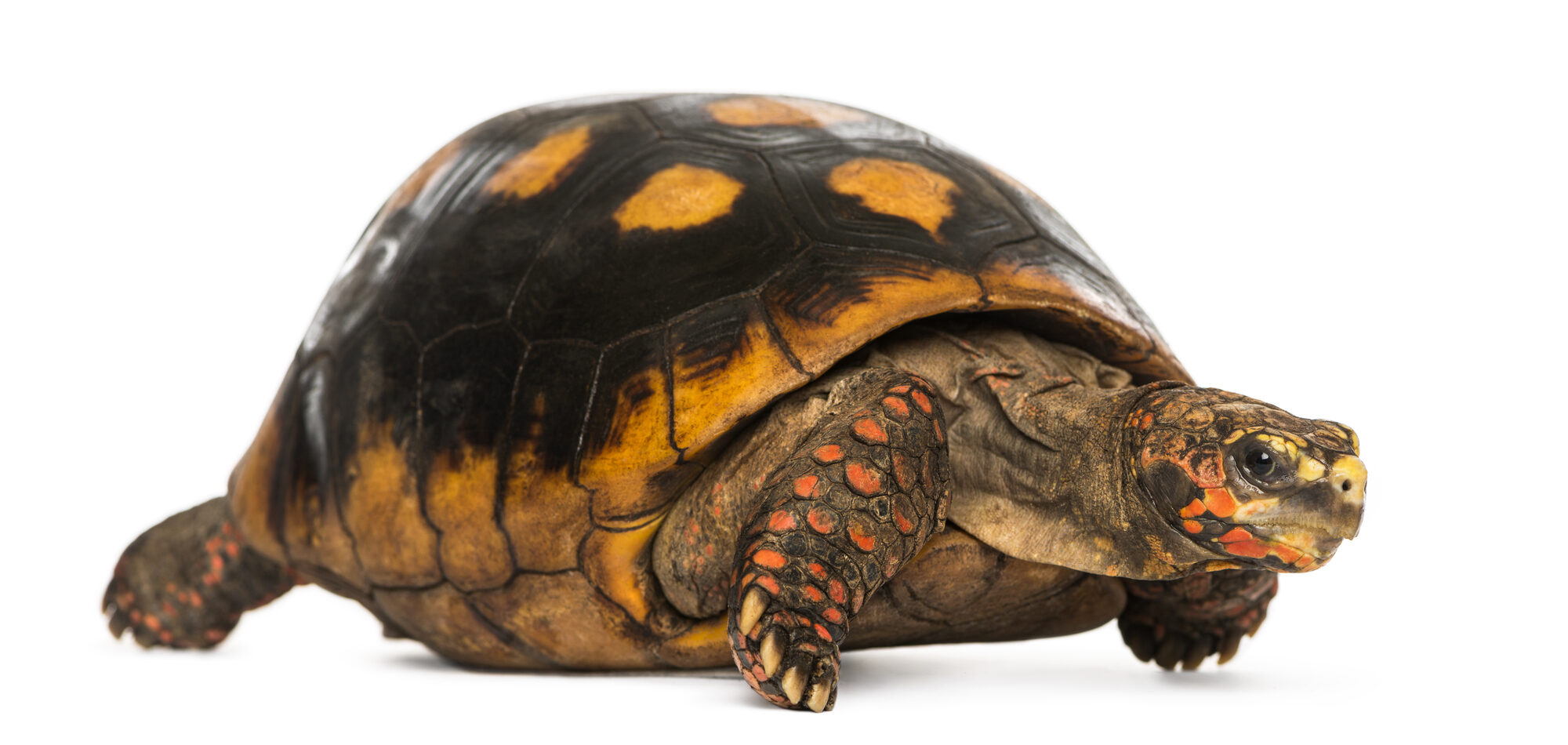
Red-Footed Tortoise
Colorful, curious, and surprisingly personable — red-footed tortoises are one of the most engaging tortoise species you can keep.
Red-footed tortoises are colorful, personable, and one of the most popular tortoise species in the hobby. Native to South America, they inhabit tropical forest and grassland environments. Their bright red and orange scale markings make them striking animals, and their curious, social personalities make them engaging pets. Red-footed tortoises are more tolerant of humidity and varied diets than many tortoise species, making them somewhat more forgiving for keepers. With excellent care, red-footed tortoises can live over 50 years.
Diet & Feeding
Red-footed tortoises are omnivores and need a varied diet. The bulk should be leafy greens (collard greens, dandelion greens, mustard greens, hibiscus leaves), supplemented with vegetables, grasses, and hay. They also need fruit in their diet — unlike most tortoises, red-foots naturally eat fallen fruit. Offer a small amount of animal protein weekly (cooked lean meat, earthworms, snails). Dust food with calcium several times per week. Avoid iceberg lettuce, spinach, and high-oxalate foods as staples.
Housing & Habitat
Red-footed tortoises need significant space. Juveniles can be kept indoors in a 4-foot by 4-foot enclosure. Adults need outdoor space — a minimum 8-foot by 8-foot pen is recommended for adults, with indoor heated housing for cold nights and winter. Substrate should hold humidity — topsoil, cypress mulch, or coconut fiber work well. Provide a hide, a shallow water pan for soaking, and UVB lighting for indoor housing.
Temperature & Lighting
Ambient temperature should be 80 to 88 degrees Fahrenheit with a basking spot of 90 to 95 degrees. Night temperatures should not drop below 70 degrees. High-output UVB is essential for indoor setups. Humidity should be maintained at 60 to 80 percent — they are a humidity-loving species compared to many other tortoises.
Handling & Temperament
Red-footed tortoises become very used to their keepers and many will actively approach for food and interaction. They are curious and often tolerate handling well once comfortable. However, excessive handling is stressful — let them set the pace. They should spend most of their time in a proper, enriched environment.
Health Notes
Respiratory infections from humidity being too low, metabolic bone disease from insufficient UVB or calcium, shell rot from excess moisture with poor hygiene, and internal parasites are the primary health concerns. Regular fecal parasite screening is important, especially for wild-caught animals. Find a reptile vet experienced with tortoises.