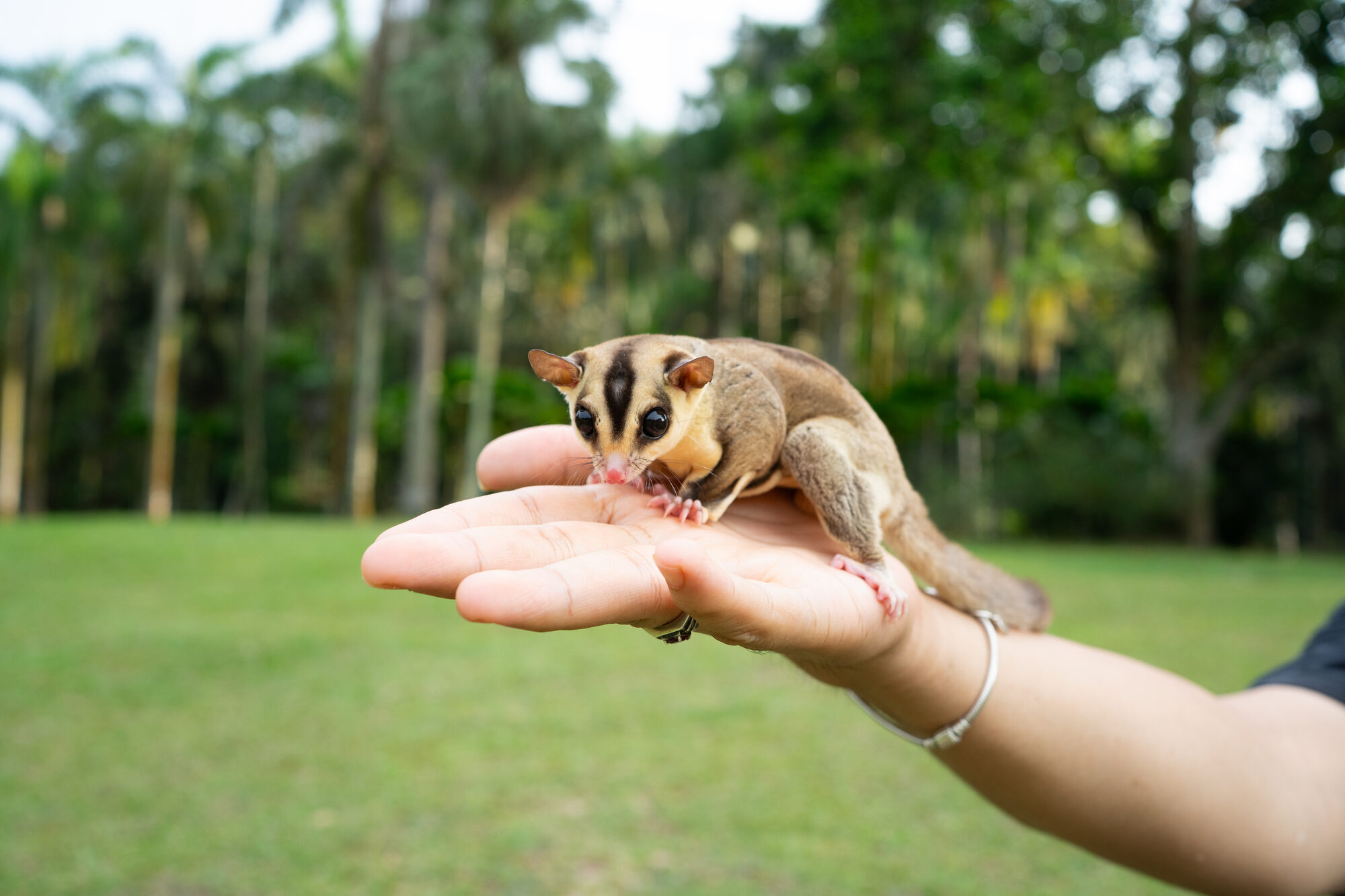
Sugar Glider
Acrobatic marsupials that bond deeply with their owners — sugar gliders are a significant but deeply rewarding commitment.
Sugar gliders are small, nocturnal marsupials native to Australia and surrounding regions. They are named for their gliding membrane that stretches from wrist to ankle, allowing them to glide between trees in the wild. Sugar gliders are highly social animals that need to be kept in bonded pairs or groups — a lone sugar glider will bark, self-mutilate, and become severely depressed. They are a significant commitment: they require extensive time, specialized diet, and regular vet care. With excellent care, sugar gliders can live 10 to 15 years.
Diet & Feeding
Diet is one of the most critical and often mismanaged aspects of sugar glider care. The BML (Bourbon's Modified Leadbeater) diet or a similar tested recipe is widely recommended as the primary diet. It typically includes a protein source (chicken baby food or blended cooked chicken), honey, apple juice, vitamins, and calcium. Supplement with about 50 percent fresh fruits and vegetables nightly. Avoid processed foods, high-fat foods, and anything with high oxalates. Fresh water must always be available.
Housing & Habitat
Sugar gliders need tall enclosures for climbing and gliding — minimum 24 inches by 24 inches by 36 inches tall, though larger is always better. Bar spacing must be no more than half an inch. Provide ropes, branches, pouches, hammocks, and nesting boxes. Line the bottom with fleece or cage liners. They are nocturnal, so their cage should be in a quiet area during daylight hours. They need several hours of daily interaction outside the cage.
Temperature & Lighting
Sugar gliders prefer temperatures between 65 and 80 degrees Fahrenheit. They cannot tolerate cold temperatures and should never be exposed to drafts or air conditioning vents. They are mammals, so normal household temperatures usually work well as long as extremes are avoided.
Handling & Temperament
Bonding with sugar gliders requires significant time and patience. Young joeys (babies recently out of the pouch) bond most readily. Bonding pouches — soft cloth pouches worn against your body — allow them to spend time near you and learn your scent while you go about your day. Once bonded, sugar gliders are affectionate and will glide to you, seek you out, and groom you. Unbonded or improperly socialized gliders will crab loudly and bite.
Health Notes
Metabolic bone disease from poor diet is serious and sadly common. Self-mutilation (usually from loneliness, stress, or pain) is a behavioral health crisis requiring both veterinary and husbandry intervention. Parasites, dental disease, and fur loss are other concerns. Sugar gliders require a vet experienced with marsupials — not all exotic vets are qualified. Research laws in your area, as sugar gliders are illegal in some states.